
By MICHAEL DUKES
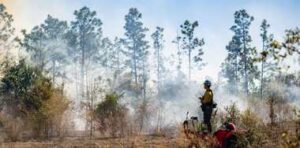
For many Floridians, water conservation becomes a priority only when lawns begin to turn brown, lakes recede, springs stop flowing or water restrictions appear in the headlines. But starting last year, Florida experienced the third driest September-to-March period on record and, by April, almost all of the state was in a moderate to exceptional drought.
If we only wait until an extreme drought develops before thinking about conservation, we have already missed the chance to protect one of the state’s most important natural resources. Water conservation cannot just be an emergency response; it needs to be a year-round priority in Florida.
As someone who has spent decades studying landscape irrigation and water use, I constantly find myself telling homeowners that the most effective conservation practices are the ones implemented long before drought conditions even arrive. During a severe drought, everyone suddenly wants to save water. The problem is that sustainable water use doesn’t work well as a temporary reaction; it works when conservation is built into our daily decisions and landscape practices.
Florida’s landscapes can consume a tremendous amount of water when automatic irrigation systems continue running whether landscapes need water or not. Research from the University of Florida Institute of Food and Agricultural Sciences (UF/IFAS) consistently shows that homeowners can often significantly reduce unnecessary irrigation without sacrificing healthy lawns or landscapes.
What surprises many people is just how much water a residential irrigation system uses. Even a well-designed and efficient system can use nearly 1,000 gallons of water during a single irrigation cycle, often much more.
One of the simplest steps for mitigating this is to turn automatic irrigation systems off and manually turn the system on only when the landscape actually needs water. Too many irrigation systems are programmed once and forgotten, running on schedule regardless of the season, rainfall levels or plant needs.
UF/IFAS research also emphasizes the importance of properly functioning rain sensor shutoff devices. In fact, Florida law requires automatic irrigation systems to have technology that interrupts irrigation during periods of sufficient moisture. Properly functioning rain sensors prevent irrigation systems from operating after rainfall events and help conserve water. They also reduce runoff that can carry fertilizers and other pollutants into groundwater and surface waters.
Another important practice is to evaluate where irrigation is truly needed. Established landscape plants often require far less irrigation than newly planted ones. In many landscapes, sprinkler heads continue spraying mature plant beds long after plants are established and capable of surviving on natural rainfall for much of the year. Capping unnecessary sprinkler heads and converting plant beds to more effective irrigation methods can substantially reduce water use. Ultimately, the goal is not to stop watering entirely but to water responsibly, efficiently and only when necessary.
Right now, Florida is experiencing a historically significant, statewide drought at a time when the population and water demands are continuing to grow. Even with recent rainfall, more than 13 million Florida residents live in areas experiencing drought. And Florida’s future depends on water. Our economy, environment, agriculture and quality of life are all tied to healthy water resources. Population growth and increasing demand mean we cannot afford to treat conservation as a temporary inconvenience during drought years.
Conservation shouldn’t begin when reservoirs decline or restrictions are imposed. If we want Florida to thrive for future generations, protecting water resources must become a permanent commitment, not an occasional response to a crisis.
Michael Dukes, Ph.D., is a UF/IFAS associate dean for extension, the director of the UF/IFAS Center for Land Use Efficiency and a faculty member in the UF/IFAS Department of Agricultural and Biological Engineering. He helps bring data-driven solutions to industry partners, state agencies and decision makers to protect Florida’s water resources.