
By PATRICK GILLESPIE
During a trip through Florida this week, the Florida Specifier interviewed EPA Deputy Administrator David Fotouhi, the agency’s No. 2 in command, about the agency’s focus, the purpose for a trip south, and what agency leadership is focused on heading into 2027.
Fotouhi, who was confirmed to the position in June 2025, arrived in Pensacola on Wednesday to meet with local officials in Pensacola, including Mayor D.C. Reeves and port officials to discuss the Birdon Port of Pensacola expansion as well as the Escambia Wood Treating Company Superfund site. Also on the trip, Fotouhi visited with officials from NAS Pensacola, NAS Whiting Field, and Eglin Air Force Base. Fotouhi, an attorney, served in the first Trump Administration as Acting General Counsel for EPA.
His presence in Northwest Florida signifies the agency’s commitment to investing in environmental cleanup efforts to promote both economic development and miliary readiness.
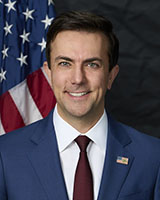
“One of our priorities at EPA is expediting the cleanup and remediation of contaminated sites across the country, and so I wanted to come down here in person to see the progress that’s been made and hear directly from local leaders about that,” he said. “Our focus is supporting the military readiness mission by working with the service branches on addressing legacy contamination issues at their sites and other federal facilities so that we can do what we need to do to support those men and women who live on or near base.”
Birdon has announced plans to develop a 400,000-square-foot advanced shipbuilding operation at the Port of Pensacola, where the company will build ships for the Marines and Coast Guard. The project is expected to bring 2,000 jobs to the area and has been boosted by federal, state and regional funds. Meanwhile, the City of Pensacola and NAS Pensacola are involved in major cleanup projects the EPA is supporting, Fotouhi said.
“EPA is focused on contaminated site remediation and getting sites back into productive reuse,” he said.
Fotouhi announced this summer a new EPA project called the Superfund Solutions Initiative, which is designed to shift the Agency’s resources when it comes to cleaning up the more than 1,300 Superfund sites that exist around the country.
Superfund sites are locations where long-term practices of dumping or not containing hazardous waste have contaminated the ground and pose a risk to human health. They are largely manufacturing facilities, processing plants, mining operations, landfills and other similar industries.
This initiative is designed to re-focus Agency resources, science and decision-making processes to speed up the cleanup process. In Pensacola, the American Creosote Works Superfund site is expected to be cleaned and turned into a park for residents.
“We’ve got sites across the country — over 1,200 of them on the National Priorities List — some have been on there for 30 plus years. And in fact, some sites it’s taken EPA more than a decade to even just select what the remedy should be,” he said. “And from our perspective, that’s just simply too long for a site to be not within the use of a local community and just sort of fenced off and not providing that benefit to the local community. So, the effort is really a multi-pronged, expert-led approach where we are reducing the amount of time that it takes for sites to get through these processes, selecting remedies more quickly, applying science in a more common-sense way, thinking about well what’s the future use of that site going to be and taking that into account when deciding what the best remedy should be.”
Whether Superfund sites or permits for major development projects, permit-seekers often face years of delays as regulators and reviewers get backlogged or slow down project approvals. Fotouhi said those times are changing as the Agency vows to improve review times through internal process changes and shifts of programs to the state level.
“There’s no reason why a project should be delayed or just entirely called off because they’re not able to get through the permitting process in a timely manner,” he said. “So, we’ve done sort of a multi-pronged approach. We’ve revised regulations to streamline permitting. We’ve worked with our employees, our career staff, throughout the country to really prioritize and expedite permitting and permitting decision-making.”
But some of the expertise and process has been moved to states willing to take on the work. He mentioned Indiana recently taking over permitting for coal combustion residuals at power plants.
“We’ve also worked closely with our states,” Fotouhi said. “You know, states are the primary environmental permitters in the country, and we’re encouraging states to come in under our various statutes and take delegated authority or take primacy over various permitting programs. Oftentimes, states who know their resources best, better than folks sitting behind a desk in Washington, are able to issue permits in a more timely manner.”
Trips like the one this week in Florida provide perspective on the work being done around the country and the problems Agency leadership need to address, he said.
“It’s so critical that we as leaders of the agency at the Trump EPA get out and meet our stakeholders and communities directly and first-hand,” Fotouhi said. “Administrator (Lee) Zeldin has been to every state, and now he’s making repeat visits to many states already, and I’m following in his footsteps because it’s so critical that we leave Washington and see how our decisions are impacting folks on the ground.”