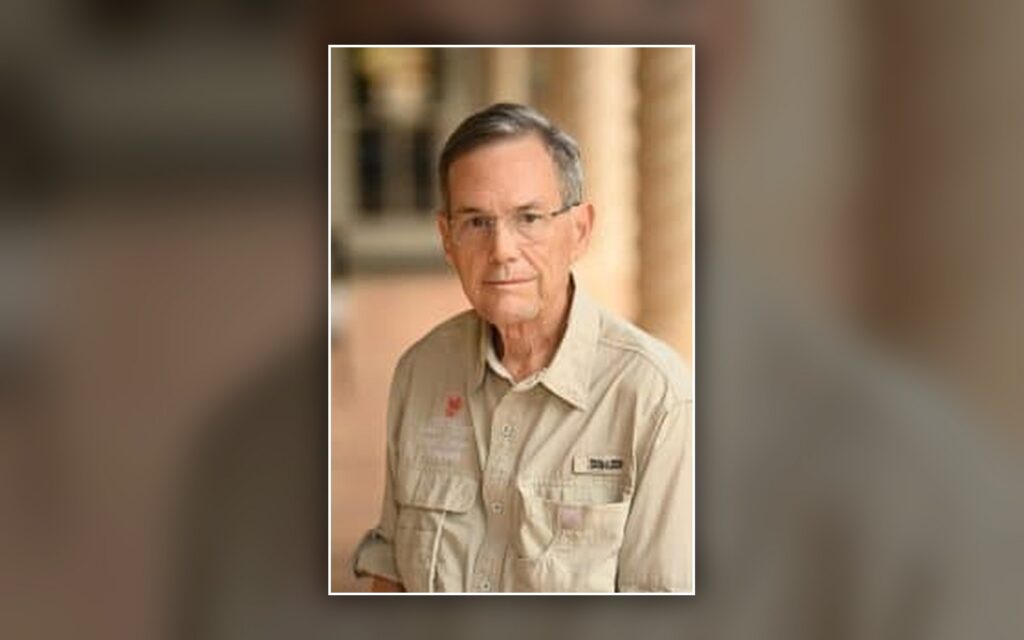

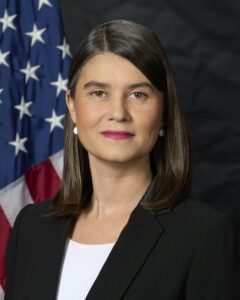
The Florida Specifier recently interviewed Teresa Booeshaghi, the U.S. Environmental Protection Agency’s Associate Administrator of OASES, a year after the agency restructured, creating the office, refocusing its mission on research and collapsing the Office of Research and Development. ORD was previously headed by an Assistant Administrator and OASES now falls directly under the EPA Office of Administrator. Booeshaghi previously served as Florida DEP’s Deputy Director of the Division of Waste Management. Below is the question and answer interview.
Q: What is the mission of the Office of Applied Science and Environmental Solutions at EPA?
EPA’s mission is to protect human health and the environment. OASES leads the agency’s gold-standard science enterprise and provides innovative applied science and environmental solutions that support the agency’s policy and regulatory decisions. OASES partners with the program offices and regions to establish priorities and science needs that are in line with our statutory authorities and ensure that we’re able to provide clean air, clean water, and clean land to all Americans.
Q: How has the mission of OASES changed after the reorganization involving the Office of Research and Development?
Over the past year and a half, EPA has undertaken a strategic restructuring effort that ensures rigorous, evidence-based science will continue to guide decision-making at the agency.
As part of that reorganization, EPA moved hundreds of scientists into our program offices, closer to the real-world regulatory work and established OASES within the Office of the Administrator to provide critical oversight of the agency’s scientific enterprise.
In addition to our science coordination role, OASES also conducts applied research that is closely coordinated with our partners across the agency to directly advance the agency’s statutory requirements. Our goal is to prioritize practical, solution-oriented research. OASES also supports cooperative federalism through collaboration with states and Tribes.
Q: What impacts have you seen in operations since the reorganization was announced and implementation began?
I was appointed as the OASES Associate Administrator and EPA’s Agency Science Advisor in April 2026, 6 months following the implementation of OASES. Since that time, I have seen many benefits to the revitalized structure.
Bringing scientists into the program offices they support has strengthened the engagement between researchers and decision makers, helping to ensure science is the backbone of every decision the agency makes.
OASES’ placement in the Administrator’s Office has helped to elevate the visibility of science across the agency, enhance scientific consistency, and strengthen our connections to agency priorities. It provides a direct line of communication between our science enterprise and senior leadership while also giving us a birds-eye-view of the agency’s programs and scientific needs.
Q: How will OASES meet EPA’s mission?
It already is! OASES has an important role when it comes to fulfilling EPA’s mission of protecting human health and the environment.
OASES was established in the Office of the Administrator to assist in coordinating and overseeing EPA’s science enterprise, aligning our applied research tightly with the needs of Air, Water, Land and Emergency Management, and Chemical Safety and Pollution Prevention program offices who are responsible for carrying out EPA’s statutory obligations.
Our office is doing important work to promote public health protection in EPA rulemaking, policies, enforcement actions, and research. OASES is also working on applied science activities that deliver solutions for responding to environmental emergencies; identifying potential health and ecosystem effects; remediating contamination; monitoring, protecting, and restoring environment, and informing waste and materials management decisions.
I can share many examples of how ongoing OASES work is making a real impact toward meeting EPA’s mission, but I’ll take this opportunity to share just one here. Lead remains a real problem for millions of Americans. EPA researchers have installed a lead service line identification test bed at our regional research laboratory in Edison, New Jersey. There, EPA is evaluating emerging lead service line identification technologies under controlled, consistent conditions. This helps identify what emerging minimally invasive methods are reliable for locating and classifying lead service lines in communities, with the ultimate goal of replacing them and safeguarding public health. I’m looking forward to visiting Edison in a few weeks to see the testbed for myself.
Q: Tell me a little bit about the Gulf Coast Environmental Science Laboratory, how many people work there and what work they do?
The Gulf Coast Environmental Science Laboratory houses the Gulf Coastal Science Branch within the OASES Coastal Science Solutions Division as well as a handful of staff from other EPA offices.
The lab is home to a workforce of approximately 65 staff – federal scientists, professional staff, research fellows, IT, operations and maintenance and security teams. The lab delivers applied collaborative research to inform decision-making aimed at protecting, remediating and restoring coastal resources to advance EPA’s statutory obligations to safeguard human health and the environment.
Q: Why is that facility located in Florida and does that give EPA a strategic benefit?
The laboratory in Gulf Breeze was initially established by the U.S. Fish and Wildlife Service and later inherited by EPA in 1970. EPA is federally mandated to maintain a research facility in the southeastern area to conduct research, investigations, experiments, field demonstrations and more.
Beyond its original purpose, the facility’s location provides many distinct advantages. It is the only EPA research facility in the Gulf with specialized capabilities to study coastal ecosystems, watersheds, and how pollution and other human activities affect aquatic resources. The lab’s position also allows it to play an important role in research response for crisis events like hurricanes and oil spills.
The facility also has unique assets, like a 14,000 ft² wet laboratory for evaluating impacts of stressors on fresh and saltwater species; a 19,000 ft² chemistry, microbial, and molecular laboratory supporting analytical activities; a research fleet that includes offshore and nearshore vessels; and a Unit Dive Team for scientific dives and trainings.
Q: What type of research is happening there and how is that research being applied to EPA standards and other environmental projects?
There’s a lot of great research happening at our Gulf Breeze laboratory. Our scientists are combining fieldwork, laboratory studies, and computer modeling to better understand how pollution and other human activities affect aquatic ecosystems. That work is helping to inform water quality standards and environmental management decisions.
They are also developing new tools and methods to evaluate how effectively we can clean up contamination and restore damaged ecosystems.
Their work helps EPA better assess the health of aquatic ecosystems and protect our nation’s waters and the health of surrounding communities. Let me share a few examples:
In Pensacola Bay, our researchers are monitoring water quality, including low oxygen and changes in acidification. Understanding where these conditions occur and how long they last can help inform our goals of improving and protecting the Bay’s water quality.
In collaboration with local estuary programs, they are using environmental DNA or eDNA to learn more about fish and other aquatic species living in Pensacola and Perdido Bays. Living organisms constantly shed and excrete DNA into the environment, and by analyzing this material scientists can better understand local biodiversity (including endangered and invasive species) and create a clearer picture of the health of aquatic ecosystems.
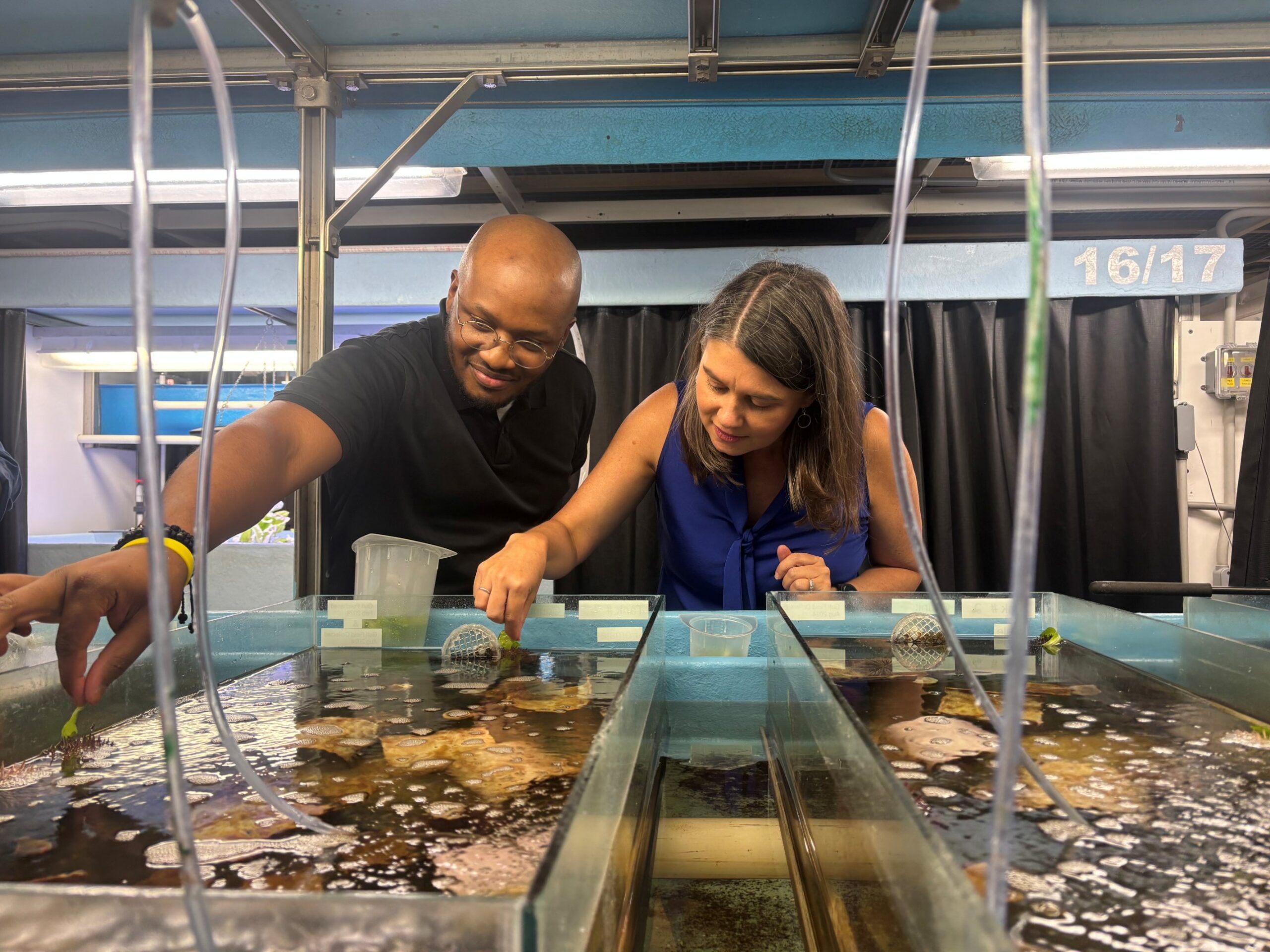
The Gulf Breeze campus is also home to EPA’s only coral lab. EPA scientists are studying corals under controlled laboratory conditions so we can better understand how pollutants and other environmental stressors affect these important ecosystems. What makes this facility especially valuable is our ability to bring questions from the real world into the laboratory. We can recreate environmentally relevant conditions, carefully control exposures, and measure how corals respond. For example, our research has examined how sediment impacts coral systems. Our scientists are studying species-specific coral responses to sediment and working to further refine threshold values across multiple species. The research can have very practical applications. For example, understanding how corals respond to sediment can help inform operational approaches intended to reduce impacts associated with activities such as dredging.
Q: Do OASES and the Laboratory have connection with private industry to partner on solutions and if so, do you have any examples?
I have made it one of our program goals to increase public private partnerships in the coming year. Building relationships with private industry can help identify practical solutions that benefit both the environment and communities that depend on it. I believe that some of the best solutions come from bringing people together who may approach a challenge from different perspectives. Connecting with private industry is an important part of that. Businesses bring innovation, technical expertise and resources that can help us address environmental challenges in practical ways and often offer opportunities for mutual benefit.
OASES has multiple examples of these partnerships across the organization. Our scientists at the Gulf Breeze lab are partnering with private industry on a number of projects. They’re collaborating on models and data to support Total Maximum Daily Loads (TMDLs) development, partnering on contaminated sediment characterization and sediment dredging design, and collaborating with industry to develop and refine analytical protocols for critical emerging contaminants of concern for aquatic environments.
More broadly, across OASES, we are also partnering with private industry to advance the science and understanding on topics such as the thermal destruction of PFAS. By partnering with municipal and hazardous waste facilities to do facility-scale testing, we can evaluate how effective incineration is in treating PFAS, building on the pilot-scale testing that takes place at our labs. These tests, including one that took place in Florida, help us understand what happens when these waste-to-energy facilities process materials that contain PFAS.
Q: Even though you have a national role, is Florida still your favorite state and why do you say yes?
Without a doubt, Florida is still my favorite state. I spent 25 years living and raising my family there, so it will always hold a special place in my heart. Add sunshine, beautiful beaches and toes in the sand, and it’s an easy choice. And with a student at the University of Florida, I’m still very much invested in the state – Go Gators!
My national role has given me the opportunity to travel across the country and experience the incredible natural beauty and diversity of our states. It has also deepened my appreciation for the natural resources that make each state unique and reinforced how important it is to protect Florida, which is especially meaningful to me, both because of my years there and because of the responsibility we all share in preserving what makes it so special for future generations. Through my travels, I discovered Oregon, which is giving Florida a run for its money, but dipping my toes in the Pacific Ocean was a very different, and much chillier experience!
So yes, Florida still gets my vote, and I’m proud that my work allows me to help protect the state I still consider home.