
By STAFF REPORTS
3…2…1 Fire in the hole!
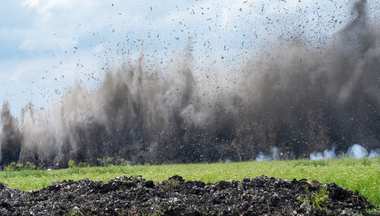
One of the largest controlled construction detonations ever conducted took place in May by the U.S. Army Corps of Engineers to advance the EAA Reservoir Project. The detonation used 140,000 pounds of explosive material and moved 270,000 cubic yards of earth. This blast took place as part of the ongoing construction of the project.
A month before the blast, Gov. Ron DeSantis and Adam Telle, the Assistant Secretary of the Army for Civil Works at the U.S. Army Corps of Engineers, announced that all of federally funded contracts have been executed to expedite the completion of construction of the EAA Reservoir by 2029, five years ahead of the original timeline. This ensures that funding and resources will remain secured through project completion.
The South Florida Water Management District (District) and the U.S. Army Corps of Engineers (USACE) are 50/50 partners in implementing the nation’s most ambitious ecosystem restoration effort: the Comprehensive Everglades Restoration Plan (CERP). CERP was authorized in 2000 to reverse the ecological damage caused by building the regional water management system known as the Central and Southern Florida (C&SF) Project.
The original C&SF Project was authorized by Congress in 1948 and created a water management system to provide flood protection and water supply. It supported growth in Florida but disrupted the natural ecology and economy of America’s Everglades, coastal estuaries, rivers and lakes. In addition to the ecosystem restoration benefits, CERP also has large-scale resiliency benefits by recharging the underground drinking water aquifers.
In January 2023, DeSantis signed Executive Order 23-06 in Bonita Springs to supercharge Everglades restoration and protect Florida’s water resources. The order built on the success of Executive Order 19-12, signed four years earlier, and also expedited Everglades restoration and water quality improvements.
In July 2025 at Environmental Permitting Summer School, the Governor announced that the State of Florida and the U.S. Department of the Army reached a landmark agreement to further accelerate the restoration of America’s Everglades.
The new agreement between Florida and the U.S. Army Corps of Engineers cuts the EAA’s Reservoir’s construction timeline in half and allows the State to build projects on behalf of the U.S. Army Corps of Engineers saving time and money.
The EAA Reservoir, located south of Lake Okeechobee, will store over 78 billion gallons of water — larger than Manhattan — and deliver up to 470 billion gallons of clean water annually to the Everglades and Florida Bay. It also supports the Biscayne Aquifer, the primary source of drinking water for South Florida.
A few days before the announcement of the new agreement, DeSantis marked the official opening of the Caloosahatchee (C-43) Reservoir, one of the most significant Everglades restoration projects in Florida’s history. State, local and environmental leaders celebrated the 10,000-acre reservoir that will improve water quality, protect coastal ecosystems and expand Florida’s water storage capacity.
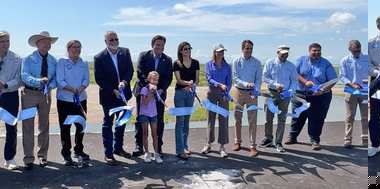
The C-43 Reservoir will hold 55 billion gallons of water and reduce harmful flows of water to the Caloosahatchee Estuary in Southwest, Florida. Florida continues to make record investments in Everglades restoration to further protect the natural resources that make this state so iconic. This accomplishment is another massive step forward to improve our water resources and support the restoration of the Everglades.
In December 2025, the South Florida Water Management District and the U.S. Army Corps of Engineers celebrated the completion of the Biscayne Bay Coastal Wetlands Project. This project will improve the health of Biscayne Bay and aid in wetland rehydration — building coastal resiliency and improving water quality in this area of Miami-Dade County. This project restores freshwater flows to southern Biscayne Bay and Biscayne National Park while improving salinity distribution near the shore. It also restores historical freshwater wetland habitat adjacent to the Bay, which acts like a sponge, soaking up water in the wet season and slowly releasing it in a more natural pattern.
In January 2026, the District celebrated the completion of the Picayune Strand Restoration Project in Collier County. The Picayune Strand Restoration Project will restore the natural flow of water over approximately 55,000 acres in unincorporated Collier County. That land was drained in the 1960s for residential development and the restoration project is restoring the area as close as possible to natural conditions.
Lastly, raising and reconstructing a section of Tamiami Trail in Miami-Dade County is almost complete. This project is a crucial component of CERP aimed at allowing increased flows of water to go south into the Everglades annually. The higher, bridged design helps restore the hydrology by allowing greater flows and eliminating a barrier that acted as a dam. This project benefits wading bird populations, fish and other wildlife.
Visit SFWMD.gov to learn more about the work of the South Florida Water Management District.