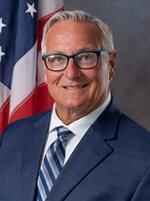
By JAMES MOONEY
I am filing legislation to update Florida’s official state bird from the Mockingbird to the Flamingo, while also designating the Florida Scrub-Jay as our state songbird. This is more than changing symbols — it’s about telling the story of Florida’s wildlife, our conservation progress and the work still ahead.
The American Flamingo is a native Florida species with a remarkable history. In the late 1800s and early 1900s, flamingos were hunted nearly to extinction by plume hunters seeking their feathers, skin and tongues. Thanks to major Everglades restoration efforts and significant water quality improvements across the state, flamingos are now returning and thriving once again.
Both the Florida Fish and Wildlife Conservation Commission (FWC) and Audubon recognize the Flamingo as native to Florida. According to FWC, Flamingos were native to Florida but disappeared from the state around the turn of the 20th century. After about 1925, people started captive colonies of flamingos in South Florida, including a breeding colony at Hialeah Park Race Track in the 1930s, which still remains today.

Evidence suggests that some American flamingos in Florida have arrived on their own from outside of the state. The FWC treats flamingos as native species protected under the Federal Migratory Bird Treaty Act.
Flamingos have long been embraced by Floridians — so much so that the Florida Lottery even features the flamingo in its branding and on its tickets. Tampa International Airport boasts a 21-foot flamingo sculpture nicknamed Phoebe. Tourists from all over often associate the Flamingo exclusively with Florida, as seen in countless movies, television shows, and other media.
Designating the Florida Scrub-Jay as the state songbird highlights another important message. Found only in Florida, the Scrub-Jay continues to lose habitat as our state grows. Elevating its status underscores the need to protect the unique scrub ecosystems this species depends on.
This legislation also acknowledges Gov. Ron DeSantis for investing in and accelerating key environmental and Everglades restoration projects, such as septic to sewer conversions, elevating the Tamiami Trail and many other projects that the Governor has prioritized and helped accelerate during his Administration.
All of these projects help protect our natural resources while supporting the state’s continued growth. By updating our state symbols, we remind Floridians why these efforts matter and why preserving our wildlife must remain a priority.
As unique as any state in the country, Florida’s diverse ecosystem provides ample room for the state to recognize two uniquely Florida birds – both the American Flamingo and the Florida Scrub-Jay as leaders continue to find balance between the people and the animals that make our state great.
James Mooney (R-Islamorada) is a State Representative from District 120. Mooney’s bill, HB 11 – Designation of the State Birds – passed through its first committee hearing, the House Natural Resources & Disasters Subcommittee on Dec. 3. Its companion bill – SB 150 by Sen. Ana Maria Rodriguez (R- Miami)– passed its first committee hearing, Senate Environment and Natural Resources, Nov. 4.