
By STAFF REPORTS
Florida’s effort to regain control of federal wetlands permitting continues on several fronts, with recent developments in the courts, Congress and the executive branch offering different potential paths toward restoring the state’s Clean Water Act Section 404 program.
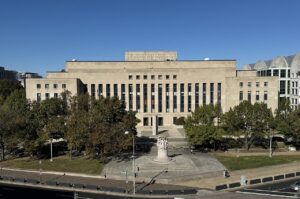
The latest judicial development came Oct. 8, when the U.S. Court of Appeals for the D.C. Circuit denied the federal government’s request to reconsider its March ruling against Florida’s assumed permitting program. The decision leaves the appellate ruling in place, but the legal dispute may not be over.
Florida and the federal government may still seek review by the U.S. Supreme Court. Florida previously requested and received an extension of time to petition the Court, demonstrating that Supreme Court review has been under consideration. Under the Court’s rules, the Oct. 8 denial of rehearing generally provides a new 90-day period to seek review, creating a potential Jan. 6, 2027 filing deadline.
The central issue remains whether federal agencies can approve a statewide permitting program using programmatic Endangered Species Act (ESA) consultation, with additional species-specific review conducted as individual permit applications are processed. The appellate court concluded that the federal agencies’ approach to Florida’s program failed to satisfy the ESA.
The denial of rehearing leaves that interpretation intact unless the Supreme Court intervenes or the underlying statutory or administrative framework changes.
Congressional Activity
In September, Florida Department of Environmental Protection (DEP) Deputy Secretary John Truitt testified before the U.S. House Natural Resources Subcommittee on Water, Wildlife and Fisheries in support of H.R. 9017, the Restore Florida Water Independence Act of 2026, sponsored by Congressman Byron Donalds.
The legislation would address the ESA deficiencies identified by the courts by recognizing the programmatic biological opinion and associated incidental take statement supporting Florida’s 2020 assumption as compliant with the ESA. It would also eliminate the need for additional Section 7 consultation concerning the U.S. Environmental Protection Agency’s (EPA) approval of the state program.
The proposal follows a 2024 effort by Senators Rick Scott and Marco Rubio and Congressman Aaron Bean to codify the assumed Section 404 programs in Florida, Michigan and New Jersey while clarifying the statutory pathway for other states seeking assumption. The earlier proposal addressed state assumption more broadly, while the Donalds’ bill focuses on the particular ESA issues underlying Florida’s litigation.
Executive Branch Activity
The Department of Justice’s August rehearing petition, filed on behalf of federal agencies, challenged the appellate court’s interpretation of the ESA consultation requirements. The federal government argued that the decision imposed an impractical standard for programmatic consultation and could affect other state-administered environmental programs. Rather than accepting the appellate decision, the administration joined the effort to preserve a more flexible approach to federal approval of state permitting programs.
The administration has also directed EPA and the Army Corps of Engineers (Corps) to review federal water-permitting requirements as part of a broader effort to improve affordability and reduce regulatory barriers to development. A March executive order called for reviewing requirements affecting wetlands, stormwater and other waters. These directives establish a general policy direction, but they do not independently resolve the court’s concern.
EPA’s revised regulations governing state and tribal assumption of Section 404 programs, finalized in December 2024, remain an important part of the regulatory framework. Those revisions clarified the procedures and requirements for assumption but did not resolve the particular ESA consultation issues at the center of Florida’s litigation.
A potential administrative solution would require the federal agencies to develop a revised approach to ESA consultation that satisfies the courts while preserving the practical advantages of state assumption. Whether that can be accomplished without legislative changes remains uncertain.
What’s Next
The Corps continues administering federal Section 404 permitting in Florida, while FDEP continues administering the state’s separate Environmental Resource Permitting program.
Florida’s next steps may depend on whether the state or federal government seeks Supreme Court review, whether Congress advances legislation addressing the ESA issues or whether federal agencies pursue a new administrative approach.
Congress expressly authorized states to assume Section 404 permitting authority, yet only Michigan and New Jersey currently administer assumed programs. Florida’s experience illustrates the difficulty of reconciling that authority with federal environmental statutes that continue to apply when EPA approves a state program.
Whether congressional or administrative efforts ultimately restore Florida’s program — or establish a more durable pathway for other states — remains to be seen.