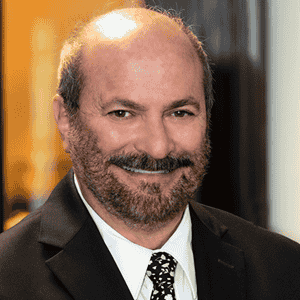
Bruce Ritchie, a statewide environmental reporter in Florida for nearly 40 years, retired in March from Politico Florida. Ritchie moved to Gainesville in 1988 after he worked as the Capitol Reporter for The Montgomery Advertiser and United Press International.
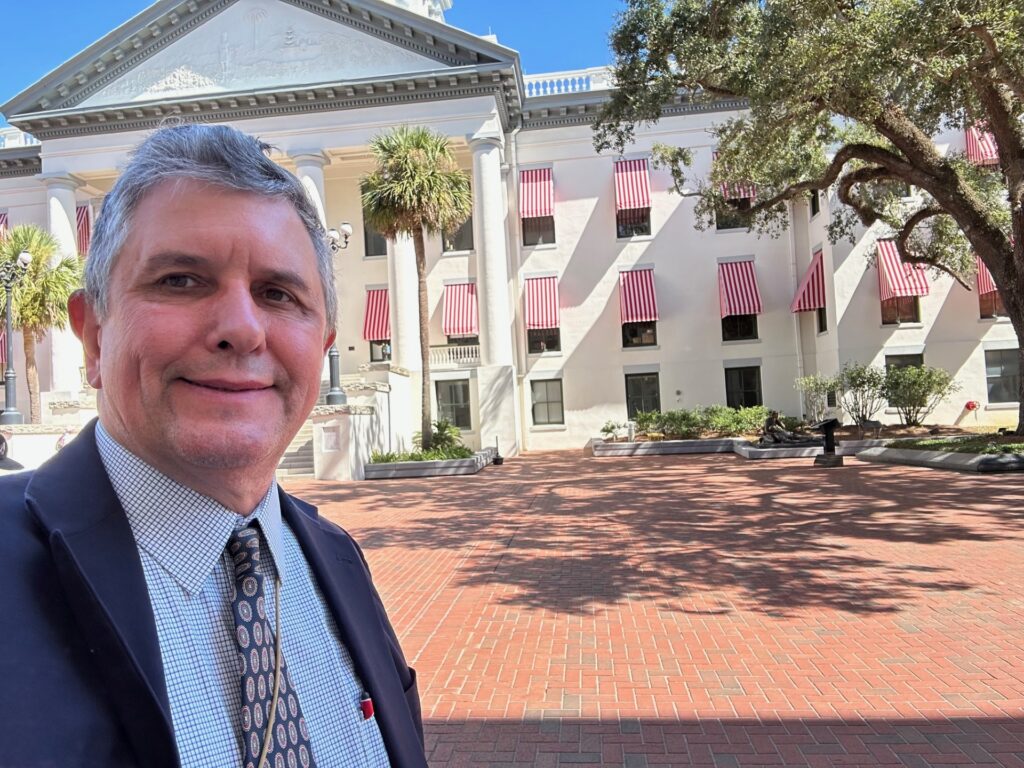
He grew up in Richmond, Va., earned a bachelor’s degree in journalism from the University of South Carolina and a master’s degree in mass communication with an emphasis on environmental journalism from the University of Florida.
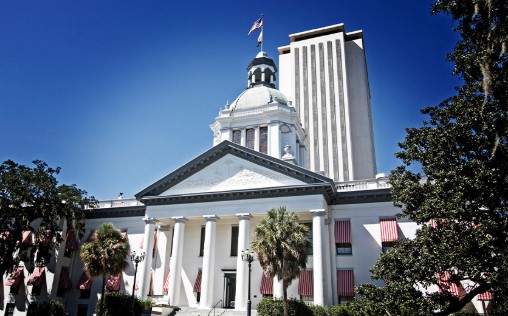
Ritchie has been a fixture in the state Capitol, Florida Cabinet meetings, Acquisition and Restoration Council, and other government-related public meetings for a long time, bringing environment and energy policy reporting to the masses.
Ritchie answered questions from the Florida Specifier about his work in Florida and his future plans.
Q: When did you start covering environmental issues in Florida and how did you get into this particular topic area?
A: I started covering a few environmental issues shortly after moving here in 1988 to take a job with the Florida Times-Union. I was inspired by Times-Union environmental reporter Beverly Keneagy while working in a remote bureau (back when newspapers had those). I covered the proposed state siting of a hazardous waste incinerator in Union County as well as wildfire recovery in Pinhook Swamp and pollution fines for Florida State Prison.
Q: What type of research did you do initially and continuously to understand the complexities of environment and growth issues?
A: I felt I needed to go to UF to study environmental journalism and science to become proficient on the beat. But in reality, long-term coverage of issues provides the best understanding. In Gainesville, I enjoyed field trips, community education classes, lectures and any other opportunities to learn more about the environment and about growth management. That continues today.
Q: What would you say is the most complex issue you have covered and what challenged you about it?
A: Public Service Commission rate cases are probably the most challenging stories. The volume of evidence and testimony, the jargon and need to simplify the topic without oversimplifying it is all very challenging. Tracking and explaining state legislation can be difficult as well. Certainly, powerful forces that influence the Legislature make it difficult to identify how they benefit from law changes.
Q: What about an issue you had fun covering?
A: I enjoyed covering the beach access issue in Walton County in 2025 because everything fell in place for the story in one day. That included having the local beach patrol tell me I had to move from the front of a public beach access spot. I’ve had many enjoyable outings working as an environmental journalist but many of them were not as rewarding as working on a series about growth management in Gainesville.
Q: What work are you most proud of, whether with comprehensive ongoing coverage or uncovering a particular topic?
A: Covering legislation and budget issues is the most important work I’ve done, even if I can’t point to very many stories that stand out over time. Having someone with experience to read bills and ask questions of legislators on speciality beats is crucial, in my opinion. I did a whirlwind tour of Georgia years ago for a series of stories about the water wars between Alabama, Florida and Georgia, and I’m probably most proud of that. I have taken a keen interest in threats and issues involving Florida springs and the regulation of development.
Q: From when you began covering these issues to now, what interesting trends or changes in environmental regulation in Florida stand out?
A: Agencies provided access to employees and to files when I began reporting full-time on the environment in 1993 and now they do not. Or those agencies want to charge exorbitant amounts to view records electronically. The people at the top of agencies also have less expertise and are valued more for their loyalty to whoever is governor. And there is little interest among agencies in helping a reporter or providing background explanations. Since they seem geared only to play defense, that means the reporter has to go on the offense.
Q: Over the last several administrations, hundreds of millions of dollars have been put into environmental restoration. Do you see particular advances in different areas as a result?
A: There are a lot of different types of restoration. As for Everglades restoration and the resulting increase in water storage, we are seeing fewer harmful discharges from Lake Okeechobee than we were prior to 2018. That can also depend on the weather and lack of rain. We are seeing more ecosystem restoration on state lands, but I don’t have numbers to share. From seeing invasive nonnative plant growth in North Florida (such as Chinese tallow trees), I’d say we have a long way to go. Water quality has improved in Wakulla Springs, but certainly many other springs face threats from over-pumping and groundwater pollution.
Q: What challenges do you foresee for policymakers balancing growth and environmental preservation?
A: The sheer number of people who want to move to Florida and then need space, water, energy and sewage treatment is overwhelming. We can’t fix many of the problems we have now, especially when the causes of those problems are getting worse. And that doesn’t include threats to Florida and the planet caused by climate change, plastic pollution and forever chemicals.
Q: What drove your decision to retire and do you have specific plans for life after reporting?
A: I needed a break from the daily and weekly reporting cycles. I needed to think more creatively about covering my beat and writing stories that I could be proud of. Maybe that means permanent retirement — I don’t know. I do plan to get more involved in covering the Alabama-Florida-Georgia water issues, but I haven’t figured out exactly what that will involve. I do have a book in the works about the issue.
Q: Do you plan to stay involved in environmental issues post-retirement?
A: That depends on the definition of “stay involved.” As a journalist, my involvement was reporting on issues. I would like to remain an environmental journalist, but I’m not sure I want to cross the line into becoming a political activist. This is an issue for me to sort out in the weeks ahead.