
By DANIELLE FITZPATRICK
When heavy rain begins to fall in central Florida, especially after major storms like hurricanes Ian and Milton, many residents are asking the same questions: How bad will it get? Is my neighborhood at risk?
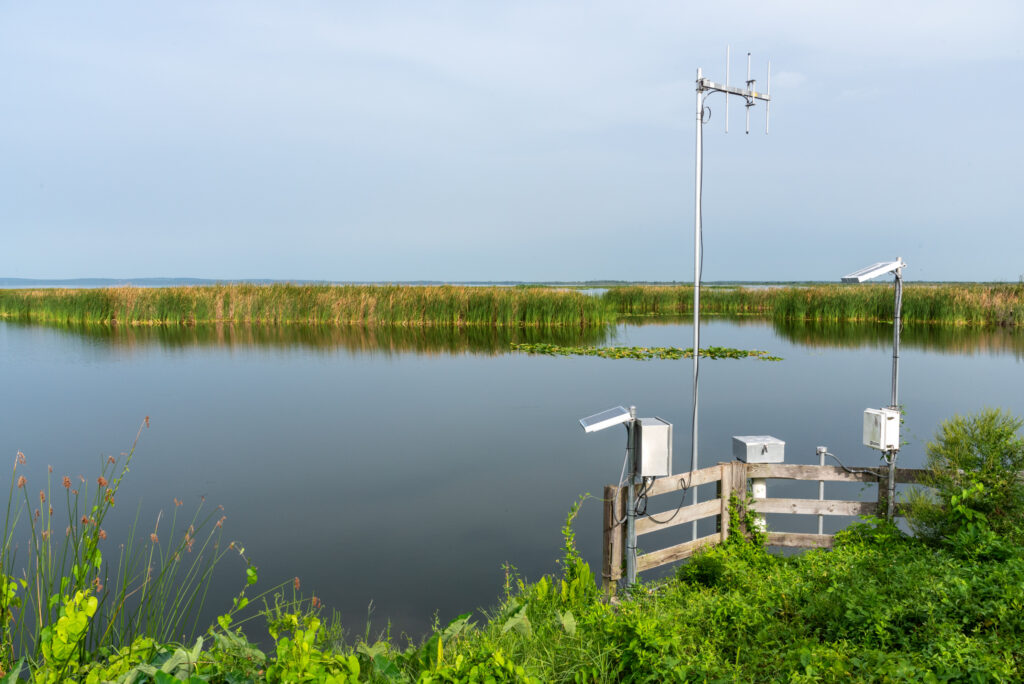
For decades, the St. Johns River Water Management District has collected extensive data from monitoring stations across the region, tracking rainfall, groundwater, springs, surface water levels and more. However, for many residents, that information has not always been easy to access or interpret.
Now, that is about to change.
This summer, just in time for hurricane season, the District will launch a modernized, user-friendly platform that allows the public to view near real-time conditions across the region. The system will include hourly updates from monitoring stations and interactive tools that let users search by ZIP code, track rainfall totals and monitor water levels throughout the District.
The platform offers a localized perspective, which staff describe as a “micro view” of water conditions. During storm events, municipalities, counties, partner agencies and residents will be able to follow conditions as they evolve hour by hour, gaining a clearer understanding of what is happening in their communities and across the broader region.
“Anytime you make it easier for people to get live data or near real-time data, you’re helping them understand current conditions,” said Chris Mundy, a District senior project manager. “When you pair that with forecasts, it allows people to better understand the impact of what’s coming and be more prepared.”
The District is also investing in a real-time flood forecasting model expected to be completed in 2027. The model will integrate weather, hydrologic and geospatial data to project water levels and flows up to 10 days in advance, giving local governments additional time to prepare and respond.
Together, these efforts reflect a broader shift in how the District approaches storm preparedness, using technology to support public awareness and decision-making, ensuring that critical water data is not only available, but accessible when it matters most.
But technology is only part of the equation. Effective storm preparedness also depends on strong coordination and communication across agencies and jurisdictions, something that became clear after Hurricane Ian in 2022.
When Ian brought extreme rainfall and widespread flooding to central Florida, many jurisdictions were focused on managing impacts within their own boundaries. What emerged, however, was a gap in coordination. Communication between water management districts, counties and municipalities was not as robust as it could be.
In response, the St. Johns River Water Management District worked with other government partners to convene the inaugural Central Florida Coordination Meeting in 2023 to strengthen regional communication and collaboration. Staff brought together the South Florida Water Management District, Seminole, Orange and Osceola counties, and municipalities across the region to share updates and discuss strategies aimed at strengthening regional resilience.
“We saw that while everyone was working hard within their own areas, we didn’t have a formal structure in place to communicate across agencies,” said Tom Frick, the District’s Chief Resilience Officer. “The idea was to bring everyone together in the same room, talk through what we’re seeing and make sure we’re aligned, especially when it comes to messaging and understanding what projects are underway or completed.”
Now held twice a year, before and after hurricane season, the meetings provide a structured opportunity for partners to meet face-to-face and discuss upcoming concerns, share project updates and review lessons learned from recent storms. They also help ensure agencies deliver clear, consistent messaging to the public on topics like stormwater systems and storm preparedness.
While agencies continue to strengthen coordination and expand tools, residents remain an essential part of the region’s resilience. Staying informed, maintaining nearby stormwater systems and understanding flood risk all contribute to how well communities weather major storms.
As central Florida faces increasingly intense and unpredictable weather, the combination of accessible data, advanced forecasting and strong regional partnerships is helping build a more informed, prepared and resilient community, one better equipped to respond when the next storm arrives.
Danielle FitzPatrick is a Public Communications Coordinator at the St. Johns River Water Management Districtt.