Seminole County BCC Talks Septic Tank Conversion
The Seminole County Board of County Commissioners held a Septic Tank Work Session on Dec. 9, with county department directors Kim Ornberg, Environmental Services, Johnny Edwards, Utilities, and consultant C. Robert Reiss. The Work Session provided an update on the status of the county’s septic-to-sewer advanced septic programs.
Seminole County contains two state-mandated watersheds, the Wekiva Priority Focus Area (PFA) and the Gemini Springs PFA. The county has until 2038 to complete remediation of septic tanks in both the Wekiva PFA, which contains 3,850 septic tanks under county jurisdiction and the Gemini Springs Basin Management Plan area, which has 1,259 septic tanks under the county.
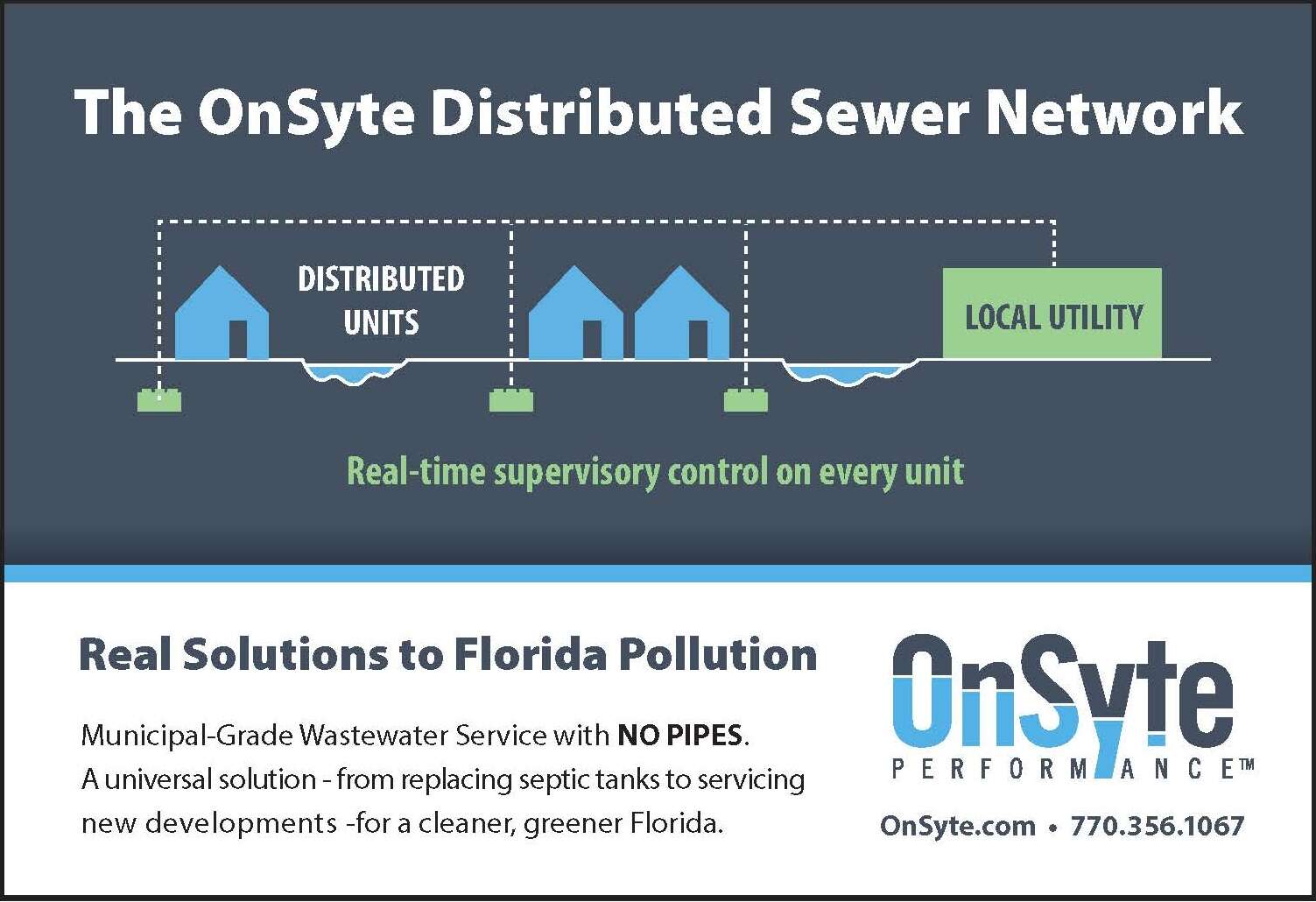
Two options for remediation were discussed, including eliminating septic tanks through connection to a central sewer system or replacement of septic tanks with advanced on-site septic treatment units. Staff provided costs for both options.
The total cost of converting all available septic tanks to sanitary sewer is $350 million. This includes $1.46 million to $2.92 million to install advanced septic tanks where conversion is not practical.
The cost of the second option, converting available septic tanks to sanitary sewer with reclaimed water, is $58 million to $604 million. The cost of the third option, converting all available septic tanks to advanced septic tanks, is $80 million to $161 million.
Cost options for property owners beyond anticipated grants were presented for the commission’s consideration for homeowner participation in the program over 20- and 30-year payment schedules. The cost was estimated at $75,000 per tank and 4.5 percent interest over the timeline schedule. Staff indicated they will continue to apply for grants and appropriations, schedule an additional work session and present the annual allocation for the program Master Plan CIP to the commission in January.
American Water Resources Association Names Three Florida National Award Winners
The American Water Resources Association recently announced its 2025 national award winners, naming two Floridians and a Florida university group among its honorees.
Ashok Shahane: William C. Ackermann Medal for Excellence in Water Management
This award recognizes an individual who has achieved a status of eminence in the design and/or implementation of exemplary water management practices at the state, regional or local government level.
Nasrin Alamdari: A. Ivan Johnson Award for Young Professionals
This award recognizes a young professional who has demonstrated outstanding achievements, talents and leadership potential through their professional activities related to water resources.
The Florida Gulf Coast University Student Chapter: N. Earl Spangenberg Outstanding Student Chapter Award
This award recognizes the Student Chapter that has provided outstanding service in the furtherance of the Association’s objectives.
More information on the awardees can be found here.
UF/IFAS Report Golden Oyster Mushroom Threat
Growing exotic mushrooms has become a popular DYI hobby, but at least one species, the Golden Oyster Mushroom, has become a national invasive plant threat. Popular for the distinct yellow color and flavor, an enthusiast can buy grow-your-own Golden Oyster kits containing active spoors in grocery stores, farmers’ markets and online for less than $30.
Researchers at the University of Florida caution that golden oyster mushrooms are aggressive colonizers associated with degradation in existing fungal communities, resulting in reduced biodiversity. They have now been reported in 25 states. In addition to impacting local ecology, they may also affect other parameters such as wood decomposition, therefore impacting ecosystems and species beyond fungi.
Buying, cultivating and transporting exotic mushrooms can unintentionally introduce these invasive species into the environment. Extreme caution should be exercised by hobbyists.
State awards $29 Million for Biscayne Bay
The Biscayne Bay Water Quality Improvement Grant Program is awarding $20 million to eight projects supporting continuing efforts to improve water quality in the bay. An additional $9.5 million will be allocated across 11 projects, advancing the state’s long-term strategy to restore Florida’s Coral Reef. Florida’s living barrier reef is unique in the continental United States.
“Biscayne Bay is Florida’s largest estuary and home to an array of important species of plants and wildlife,” said Florida Department of Environmental Protection Secretary Alexis A. Lambert. “By making strategic investments in the bay’s water quality, we are revitalizing waters that support not only our wildlife but also our economy and way of life.”
The Biscayne Bay Water Quality Improvement Grant Program supports efforts to reduce nutrients in the bay. A variety of nutrient reduction methods have been funded, including wastewater improvements, septic-to-sewer, stormwater management and other water quality initiatives.
The funded Coral Reef Restoration and Recovery Initiative projects were selected based on their impact on scaling up land-based coral propagation infrastructure and capacity and increased data management capabilities. FCR3 was created in 2023 to develop the infrastructure, technology, skilled workforce and logistics necessary by 2050 to support the long-term recovery of Florida’s Coral Reef.
Florida State Parks Announces 2025 Photo Contest Winners
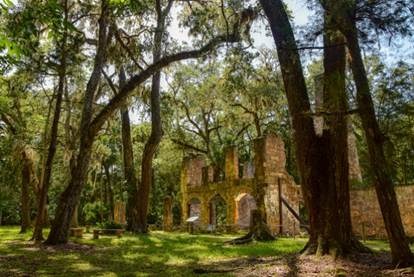
Valleri Ames’ photo “Echoes of Bulow Plantation,” taken at Bulow Plantation Ruins Historic State Park, earned the Grand Prize in the Historic Encounters Category.
Florida State Parks recently announced this year’s winners of the 2025 Capture the Real Florida Photo Contest, awarded in the categories of: Landscapes, Waterscapes, Wildlife, Park Adventures and Historic Encounters. Historic Encounters is a new special category added in recognition of America’s 250th anniversary. The contest produces thousands of entries.
“Every year, our visitors capture breathtaking moments that remind us why our state parks are among the most treasured places in the country,” said Chuck Hatcher, Director of Florida State Parks. “Thank you to everyone who shared their images. I invite all Floridians to get out and discover our state parks and maybe even grab that perfect shot.”
The Grand Prize Winners include : Landscapes: Shane Carrol’s photo taken at Olustee Battlefield Historic State Park in Sanderson, Waterscapes: Dawn Campbell’s photo taken at Silver Springs State Park in Ocala, Wildlife: Michelle Huguet’s photo taken at Myakka River State Park in Sarasota, Park Adventures: Heather Bossowski’s photo taken at Gamble Rogers Memorial State Recreation Area in Flagler Beach, and Historic Encounters: Valleri Ames’ photo taken at Bulow Plantation Ruins Historic State Park in Ormond Beach.
All Grand Prize, Runner-Up and People’s Choice winning photos can be viewed on the Photo Contest webpage. Each Grand Prize winner received a $1,000 B&H Photo gift card, a Florida State Parks Annual Pass, a stand-up paddleboard and a hammock.
The winning photos will also be on display at Weeki Wachee Springs State Park during its Winter Waterland celebration.
Florida Awards $112 Million for Water Quality and Supply Projects
The state recently awarded more than $112 million in grants for water quality and quantity improvements across Florida. Fourteen alternative water supply projects have been awarded a combined $50 million, with an additional $50 million in funding awarded to support 23 Florida natural freshwater springs restoration projects, and $12 million is earmarked for 16 innovative technology projects to help detect, prevent and mitigate harmful algal blooms.
“The funding announced today will help communities secure reliable water supplies, improve water quality and better respond to environmental challenges. These investments reflect our commitment to protecting the resources that support our economy and our way of life,” said Department of Environmental Protection Secretary Alexis A. Lambert.
FDEP announced that Florida has invested $335 million in alternative water supply projects since 2019, creating more than 445 million gallons per day of future water supply to meet the needs of the state’s rapidly growing population. The St. Johns River Water Management District was awarded two major grants, including $15 million for the Taylor Creek Reservoir Improvements Project and $10 million to support the new Water First North Florida project. These investments will help strengthen water-supply reliability and support long-term growth across central and northeast Florida.
The Springs Restoration Grants include septic-to-sewer and land acquisition projects to improve both water quality and spring flow. Florida has invested $430 million in 147 springs restoration projects since 2019, resulting in an estimated annual reduction of more than 907,000 pounds of Total Nitrogen annually.
The $12 million combined Innovative Technology program grants will fund projects to prevent, detect, clean up or mitigate harmful algal blooms. Prior investments through this program resulted in the acquisition of six technology vendors now on standby statewide, and the development of multiple tools that monitor conditions, forecast blooms and mitigate impacts are being deployed in communities across Florida. This program has received $75 million to support 68 projects to date.
SJRWMD Apopka-Beauclair Lock Reopened
The St Johns River Water Management District recently completed maintenance on the Apopka-Beauclair Lock located within the Apopka-Beauclair Canal just north of Lake Apopka. The canal serves the Harris Chain of Lakes, popular for bass fishing.
The closure was necessary to perform critical infrastructure maintenance to ensure the continued safe and reliable operation of the lock. The work is part of the District’s ongoing efforts to maintain and enhance the efficiency of Florida’s waterway systems.
The Lake County Water Alliance concurrently removed a large tussock within the waterway just south of the lock, improving navigation within the canal.
SWFWMD to Close Alston Tract for Hog Hunt Jan. 6-8
The Southwest Florida Water Management District’s (District) Alston Tract at Upper Hillsborough Preserve in Pasco County will be temporarily closed to the public for feral hog hunts Jan. 6-8, 2026.
Only the 11 permitted hunters will be allowed on the property during these dates. Alston Tract is located at 42144 Deems Road in Zephyrhills.
This activity is one of a series of feral hog hunts being held on District lands to control the damage being caused to the natural habitats.
The District only allows hogs to be controlled through hunts when the damage they cause exceeds unacceptable levels, and damage is occurring more frequently and with increasing severity.
Feral hogs live throughout Florida in various habitats, but prefer moist forests and swamps, as well as pine flatwoods. They are omnivorous and feed by rooting with their broad snouts, which can cause extensive damage to the natural habitats. In fact, they can leave an area looking like a plowed field.
Feral hogs are not native to Florida and are believed to have been introduced by explorer Hernando DeSoto as early as 1539. They can weigh more than 150 pounds, measure over 5 feet in length and travel in herds with their offspring.
Pinellas County Flood Vulnerability Assessment virtual public meeting scheduled for January
Pinellas County is hosting a Flood Vulnerability Assessment Virtual Public Meeting on Jan. 13 from 6-7:30 p.m. This Zoom meeting will present findings from a recently completed Flood Vulnerability Assessment and flood modeling used to reduce risks for critical infrastructure in the County such as roads and emergency facilities.
All residents, business owners, and other interested parties are invited to attend, especially those with ties to the following areas: Belleair, Belleair Beach, Belleair Shore, City of Pinellas Park, Indian Rocks Beach, Indian Shores, Madeira Beach, North Redington Beach, Redington Beach, Redington Shores, and flood-prone areas of Unincorporated Pinellas County.
Pinellas County is required by the State of Florida to conduct this Flood Vulnerability Assessment as a condition for receiving flood risk reduction grant funding. The Assessment focused on areas at risk of flooding during storms and heavy rainfall to better understand and mitigate risks to critical County assets and infrastructure.
Register to attend at Pinellas.gov/projects/vulnerability-assessment/
Northside Team Wins 2nd Jax Litter League Championship with Nearly Four Tons of Trash Collected
Jacksonville Mayor Donna Deegan in December announced the winners of the 2nd Jax Litter League contest, with the Northside team “Collect and Connect” claiming top honors after collecting an impressive 227 bags of trash—nearly four tons—from Jacksonville neighborhoods.
Team captain Susan Shinego led her crew to victory in the citywide competition, which challenged residents to clean up litter in their communities. For their efforts, the winning team received an elite game day experience watching the Jacksonville Jaguars take on the New York Jets, a box of Jaguars merchandise, and a photo opportunity with Mayor Deegan.
“The Jax Litter League shows what Jacksonville can accomplish when neighbors come together for our city,” said Mayor Deegan. “Susan and her team didn’t just collect trash, they’re helping to build cleaner, stronger communities across the Northside. This is exactly the kind of grassroots action that makes Jacksonville beautiful.”
The Jax Litter League is part of Mayor Deegan’s “Keep Jax Cute, Don’t Pollute” initiative, a comprehensive anti-blight effort aimed at keeping Jacksonville’s neighborhoods clean and vibrant. The program encourages residents to take an active role in maintaining their communities while fostering civic pride and environmental stewardship.
Teams from across Jacksonville participated in the second round of this contest, collectively removing thousands of pounds of litter from streets, parks, and public spaces throughout the city.