
By STAFF REPORTS
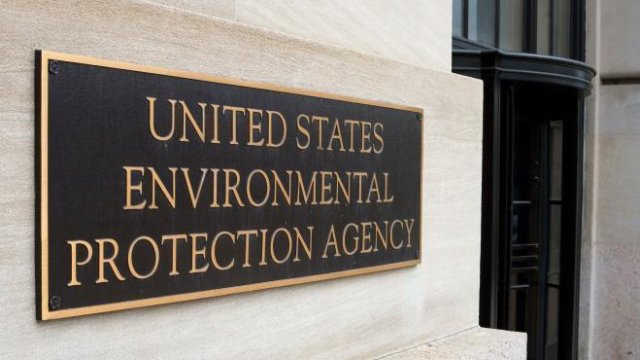
Florida has joined a 20-state coalition in submitting formal comments on EPA and the U.S. Army Corps of Engineers’ proposed update to the definition of “waters of the United States” (WOTUS). While the letter broadly supports the agencies’ effort to narrow federal Clean Water Act jurisdiction following Sackett v. EPA, it also identifies several areas where the proposed regulatory text, in the coalition’s view, still risks overextension, ambiguity, and renewed litigation.
For practitioners operating at the intersection of Florida’s Environmental Resource Permitting (ERP) program and federal §404 permitting, the letter offers a clear statement of how the state believes jurisdictional lines should be drawn—and why precision in those lines matters.
State Primacy and the Structure of the Clean Water Act
The coalition’s position is grounded in a familiar but consequential premise: the Clean Water Act establishes a cooperative federalism framework in which states retain primary authority over land and water use, while federal jurisdiction is limited to “navigable waters,” defined as “waters of the United States.”
The comment letter emphasizes that Congress did not intend WOTUS to function as a general land-use control or as a mechanism to regulate intrastate or ephemeral waters by implication. From the coalition’s perspective, repeated expansions of the WOTUS definition over the past several decades have distorted that balance, forcing federally driven permitting outcomes onto waters otherwise regulated under state law.
This matters acutely in Florida, where ERP already regulates surface waters and wetlands comprehensively, and where the boundary between state-only waters and federally jurisdictional waters can significantly impact permitting complexity, timing, and costs.
Sackett as the Controlling Standard for Jurisdictional Wetlands
The coalition letter treats Sackett v. EPA as the controlling legal framework for WOTUS moving forward. Sackett rejected the “significant nexus” test for wetlands and replaced it with a two-part standard: federal jurisdiction exists only where wetlands have a continuous surface connection to WOTUS such that the wetland is “as a practical matter indistinguishable” from the waterbody itself.
Florida supports EPA’s stated intent to align the WOTUS definition with Sackett, but argues that the proposed rule does not yet do so cleanly. In particular, the letter criticizes EPA for retaining a general wetlands definition based on saturation by surface or groundwater, rather than embedding Sackett’s indistinguishability and surface-connection requirements directly into the operative definition.
For Florida practitioners, this concern is familiar: if jurisdiction turns on vegetation or subsurface hydrology rather than observable surface connections, jurisdictional determinations revert to fact-intensive, case-by-case analyses—the very condition Sackett sought to eliminate.
Ephemeral Features and “Wet Season” Language
One of the most technically significant critiques in the letter involves EPA’s use of “wet season” concepts in defining “continuous surface connection” and “relatively permanent” waters.
Florida and the other states argue that allowing surface connections that exist only during wet seasons risks pulling ephemeral or intermittently inundated features back into federal jurisdiction. In Florida’s hydrologic context—characterized by flat topography and shallow groundwater—this language could materially expand WOTUS beyond what Sackett permits.
The letter recommends removing “wet season” references altogether and clarifying that continuous surface connections must exist under ordinary conditions. From a permitting standpoint, Florida’s concern is that state-jurisdictional waters could be captured in federal jurisdiction depending on a case-by-case analysis of seasonal conditions, undermining state primacy and predictability for applicants and regulators alike.
Prior Converted Cropland and Jurisdictional Reattachment
The coalition also flags risks associated with EPA’s treatment of prior converted cropland (PCC). While the proposed rule recognizes USDA PCC determinations, it allows EPA to reassert Clean Water Act jurisdiction if the land is deemed “abandoned” and has reverted to wetlands.
The coalition views this as problematic both legally and practically. The letter raises takings and due process concerns, but the regulatory implication is equally important: reattachment of federal jurisdiction years after conversion introduces uncertainty into agricultural land management.
For Florida farmers, the possibility that EPA could unilaterally override PCC status creates a moving jurisdictional target inconsistent with the state’s emphasis on regulatory certainty.
Costs, Major Questions, and Administrative Limits
The letter devotes substantial attention to the economic and administrative costs of expansive WOTUS interpretations. Florida aligns with the broader coalition in arguing that jurisdictional definitions with nationwide economic consequences implicate the Supreme Court’s “major questions” doctrine and require clear congressional authorization.
This argument is less about cost accounting than about institutional limits. The coalition’s position is that the definition of WOTUS should not be the mechanism by which agencies effectively redefine the scope of land subject to federal permitting, absent explicit statutory authority from Congress.
For Florida’s regulated community, this translates into support for a stable, narrow jurisdictional definition that limits §404 permitting to waters clearly intended to be federal, leaving the remainder of the state’s waters and wetlands subject to ERP authority alone.
What Florida Is Signaling
Florida’s participation in this letter signals support for a WOTUS rule that is narrower than past iterations, tightly aligned with Sackett, and resistant to interpretive creep. The state is not arguing against regulation, but against ambiguity—particularly ambiguity that reintroduces discretionary jurisdictional expansion through definitional loopholes.
For practitioners, the message is clear: Florida expects the final WOTUS rule to draw bright lines, minimize duplicative permitting over the state’s comprehensive definition of waters and wetlands, and reduce the likelihood that federal jurisdiction will once again expand through guidance or case-by-case interpretation.
Whether EPA ultimately adopts these recommendations will determine whether WOTUS stabilizes—or continues to generate jurisdictional uncertainty for Florida projects.
Source
Multi-state comment letter on EPA’s proposed Updated Definition of “Waters of the United States,” submitted January 5, 2026, signed by Florida Attorney General James Uthmeier.