
Charlotte County Commissioner Floats ‘Nuclear Option’ As Data Center Concerns Grow | Gulf Coast News
Charlotte County commissioners held a workshop to get ahead of potential data center development in the county, even though no proposals or applications have been filed. Residents and commissioners raised concerns about water use, noise, and long-term environmental impact, with one commissioner noting, “I haven’t figured out how we can replace the environment.” Board Chairman Joe Tiseo floated a “nuclear option” to change the land use code to prohibit data centers outright, but the idea was shelved for now as the county waits to see how the issue develops elsewhere.
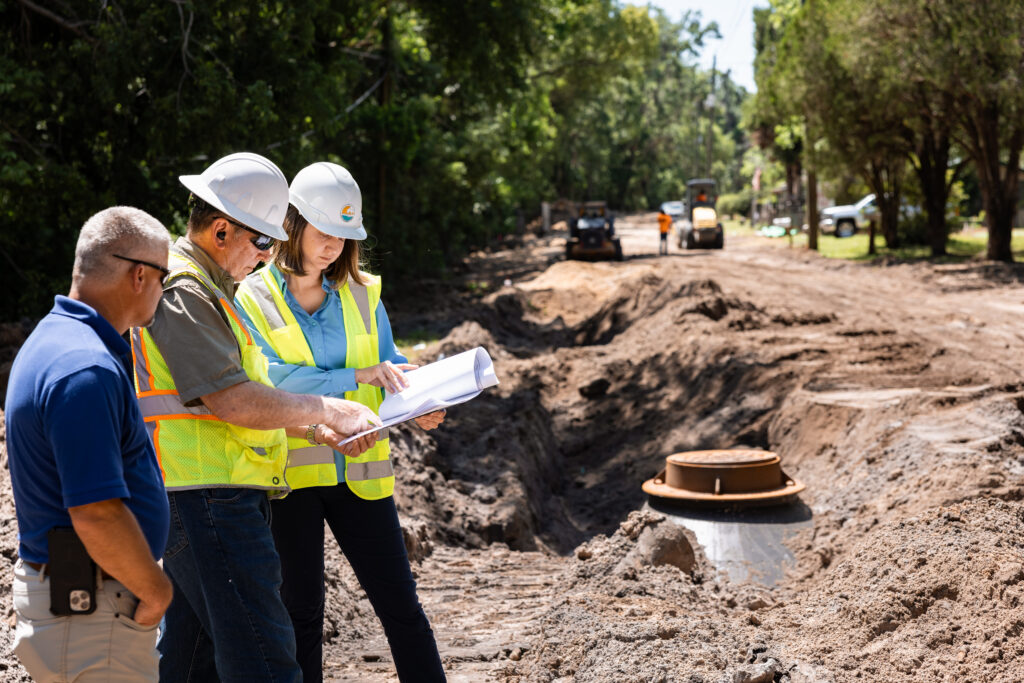
DeBary city leaders are working on funding strategies to convert about 700 homes from septic tanks to a central sewer system as part of an effort to reduce nitrate contamination in Gemini Springs. The Florida Department of Environmental Protection found in 2025 that rising nitrate levels were 40% attributable to septic tanks. The state legislature has approved engineering funding for the first phase, and Volusia County Utilities is working on a $70 million expansion of DeBary’s water treatment plant to handle the added capacity.
The National Science Foundation has reversed course on its plan to dismantle the Ocean Observatories Initiative, a $386 million network of 900 deep-sea sensors used to track climate-related data including greenhouse gas absorption, marine heat waves, and coastal sea-level changes. The reversal came after significant public and scientific outcry over the potential loss of a critical long-term climate record. The network had been targeted as part of the Trump administration’s broader rollback of federal climate science funding.
Orlo Vista Neighborhood Gets $23M Flood Mitigation Upgrade | WFTV
Orange County has invested $23 million in a flood mitigation project for the Orlo Vista neighborhood, expanding three retention ponds and adding a new pump station in direct response to the severe flooding caused by Hurricanes Irma and Ian. The project was put to the test during Hurricane Milton in 2024, successfully handling nine inches of rain. The county also has four additional temporary pumps on standby for deployment as this year’s hurricane season gets underway.
Bill To Transfer Apalachicola Water System Control Presented To DeSantis | WJHG
Gov. Ron DeSantis has received a bill that would transfer control of Apalachicola’s troubled water system to a newly created independent special district in Franklin County. House Bill 4103 follows last year’s water crisis, in which residents were left with smelly and undrinkable water after Hurricane Helene damaged a water scrubber. If signed, the bill would establish a five-member governing board with appointments split among the governor, Franklin County commissioners, and the Apalachicola City Commission, with a transfer date of December 1, 2026.
Fire Chief Warns Miami-Dade Smoke Pollution Keeps Moving To Broward | Local 10
Miami-Dade Fire Rescue Chief Ray Jadallah warned that smoke from two wildfires burning in western Miami-Dade was pushing northward into Broward County, prompting a “moderate” air quality alert from the EPA. Officials urged residents to limit time outdoors, keep windows and doors closed, and set air conditioning systems to recirculate indoor air. Those with chronic health conditions, pregnant women, and children with asthma face the highest risk from the mix of gases and fine particles.
Giant Lizards Are Invading Florida Yards | Florida Today 💲
The Argentine black and white tegu, a lizard that can grow nearly five feet long, is establishing itself across Florida and showing up in residential yards. With abundant food sources throughout the state, wildlife experts warn the species is spreading rapidly and may already be present in many neighborhoods. The tegu joins other invasive reptiles like Peter’s rock agama as a growing concern for Florida’s native ecosystems.
Audubon Asks Public To Help Track Banded Spoonbills | Keys News
Audubon Florida’s Everglades Research Station is calling on birdwatchers and boaters across the state to help track roseate spoonbills by reporting sightings of banded birds. The effort is part of a long-running study to understand spoonbill movement patterns, breeding success, and habitat use across Florida Bay and the broader Everglades ecosystem. Members of the public who spot a banded spoonbill are asked to note the band color and number and report it to Audubon Florida.