By STAFF REPORTS
At the Suwannee River Water Management District, big environmental wins often start with a simple idea: a farmer looking to reduce runoff, a town concerned about flooding, or a community group passionate about restoring a local spring. Through the District’s project process, these ideas don’t just stay on paper. With guidance from SRWMD staff, they become projects that protect North Florida’s water, land and way of life.
“We encourage anyone – residents, nonprofits, municipalities – to bring their project ideas to us,” said Mary Diaz, the professional engineer who leads SRWMD’s Office of Environmental Projects. “If a proposal aligns with one or more of our core missions, we’ll help move it forward.”
Those core missions are the foundation of everything SRWMD does:
- Water Supply
- Water Quality
- Natural Systems Restoration
- Flood Protection
It’s a four-part promise to preserve the region’s environmental integrity while supporting sustainable growth and the SRWMD’s project process is how that promise is delivered.
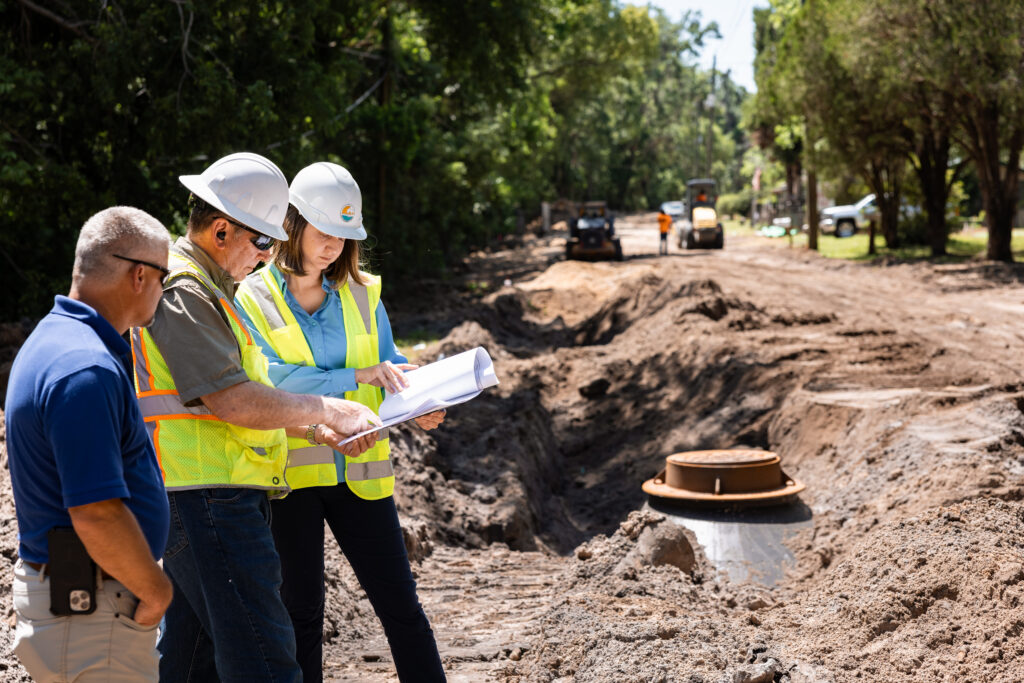
A Blueprint for a Healthier Florida
Florida is growing – fast. With more people comes more development, more water consumption, and more strain on sensitive ecosystems. The District helps implement projects to meet this moment, empowering communities to act locally while contributing to a broader, District-wide vision for resilience.
Each project approved by the District must support at least one of the four core missions. That could mean anything from improving stormwater infrastructure to restoring a degraded spring. What unites all these efforts is a focus on balancing human needs with environmental health.
“Over 90 percent of our region’s water supply comes from the Upper Floridan Aquifer,” explains Leroy Marshall, Director of the District’s Resource Management and Projects Division. “So, managing water resources in a way that protects both the people who depend on it and the environment it sustains – that’s essential.”
What Kinds of Projects Qualify?
Some projects are driven by data and engineering; others begin with conservation goals and evolve through on-the-ground partnership. Eligible project types include:
- Spring Restoration: Reviving the health, quality and clarity of spring ecosystems by reducing pollution and restoring native vegetation.
- Land Acquisition: Protecting sensitive lands through purchase or easement to prevent any future development that could be harmful and preserve habitat.
- Stormwater Management: Building features like stormwater ponds and constructed wetlands to slow and clean runoff during storm events.
- Recharge Projects: Installing recharge systems or wetland systems to replenish the aquifer and support long-term water supply.
- Agricultural Best Management Practices (BMPs): Helping farmers implement nutrient-reducing and water conservation technologies and practices.
- Utility Projects: Supporting municipal infrastructure upgrades that reduce pollution and water use from wastewater and stormwater systems.
These are more than line items on a budget – they’re living examples of community-driven stewardship.
The Process: From Concept to Construction
Whether someone is part of a small-town planning board, a ranching operation, or a grassroots environmental group, any idea can make a difference. The process for bringing it to life is designed to be collaborative, accessible and outcome-focused.
Step 1: Submit an Idea
Every District project starts with a submission. Agricultural and educational projects have their own dedicated applications, while all other proposals go through the Conceptual Project Portal on mysuwanneeriver.com.
“You don’t need to have every detail figured out,” Diaz emphasized. “If your project is in the conceptual phase, we’ll work with you to refine it.”
Step 2: Staff Guidance and Review
Once submitted, staff will review the proposal and may provide support with everything from technical design to construction. This partnership helps applicants shape their concept into something viable, fundable and aligned with the District’s priorities.
Step 3: Project Phase Evaluation
Projects can come in at different levels of readiness:
- Conceptual – Still an idea or early plan.
- Design & Permitting – Technical plans underway.
- Shovel-Ready – Construction-ready with all permits secured.
The District is flexible about where a project begins – what matters is where it can go.
Step 4: Implementation
With support and potential funding, approved projects can move into construction and monitoring. Whether it’s a new stormwater pond or a conservation easement, the outcome contributes directly to District-wide goals.
Real Solutions to Real Problems
Projects supported by the District range from rural farms to growing towns, from groundwater recharge basins to restored riverbanks.
Some recent examples include:
- Stormwater ponds that reduce localized flooding during extreme rain events.
- Recharge wetlands that allow stormwater to slowly percolate back into the aquifer.
- Spring restoration initiatives that bring back native vegetation and wildlife while improving water quality.
- BMP programs that help farmers use less fertilizer and less water while maintaining strong yields.
“Florida has grown immensely, and with it, so has water consumption,” said Diaz. “Our job is to make sure that growth doesn’t come at the expense of the environment.”
Why It Matters
Water is the lifeblood of Florida. It fuels the economy, supports ecosystems and sustains the daily life of millions of residents. The Projects process exists to ensure that local efforts to protect this resource don’t happen in a vacuum – they’re part of a coordinated regional strategy.
“Water is the heart of Florida,” Marshall says. “It’s vital for the economy, the environment and our way of life.”
By giving local stakeholders a pathway to participate, the District empowers residents to be part of the solution. And by providing the technical and strategic support needed to execute those solutions, staff turn good ideas into lasting impact.
Get Involved
If you’ve ever asked yourself:
- How can we reduce flooding in our neighborhood?
- What can we do to protect our local springs?
- Is there funding to help our farm become more sustainable?
— then you’re already halfway to becoming a SRWMD project partner.
Visit www.MySuwanneeRiver.com to learn more about:
- The Conceptual Project Portal
- Application guides for agricultural and educational projects
- Contact information for SRWMD staff
A Collective Effort
Discovering applicable and creative environmental projects is more than a permitting pipeline – it’s a community-building effort grounded in science, collaboration and a shared love for Florida’s natural heritage.
Whether an idea is small or large, in the design stage or just a thought scribbled on a napkin, SRWMD wants to hear from the community. Because in the end, protecting water means working together – one project, one spring, one community at a time.