
By STAFF REPORTS
Scientists Turn to Nature’s Recycling Insects to Solve Florida’s Seaweed Problem
A record-breaking bloom of sargassum seaweed is blanketing South Florida’s shores this summer. But inside a lab at the University of Miami Rosenstiel School of Marine, Atmospheric, and Earth Science, researchers see something else entirely: an opportunity hidden within the intrusive and ubiquitous weed.
By pairing the region’s surge of sargassum seaweed with an unlikely partner — black soldier flies — the Rosenstiel School’s aquaculture team is exploring how this growing environmental nuisance could be transformed into a more sustainable food future. The effort, supported by more than $320,000 in seed grants from Florida Sea Grant and the Hinkley Center for Solid and Hazardous Waste Management, aims to address the increasingly persistent sargassum inundation, which has shifted from a seasonal event to a recurring environmental challenge.
“Our goal is not just to provide a solution to reducing sargassum impacts to our shoreline, but to help redesign Florida’s response to it,” said aquaculture program director Daniel Benetti, a professor in the Department of Marine Biology and Ecology and director of aquaculture at the Rosenstiel School. “Instead of treating it as waste, our scalable system will convert it into valuable products for aquaculture, agriculture, and emerging bio-based industries.”
Their plan is to harness one of nature’s most efficient recyclers: black soldier fly larvae — ubiquitous insects that, in just weeks, can convert locally sourced plant-based waste into valuable products, including a sustainable animal feed ingredient and nutrient-rich fertilizer.
Partnership Permanently Protects 1,500-Acre Working Cattle Ranch in Highlands County
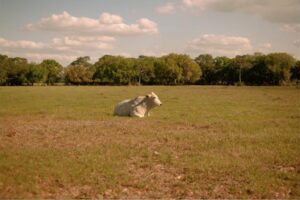
Conservation Florida is proud to announce the permanent protection of 1,564 acres at Square One Ranch, a family-owned working cattle ranch in Highlands County. The project protects one of the most important remaining pathways for endangered Florida panthers in the state while also ensuring the land remains a productive agricultural operation for generations to come.
The project was made possible through a partnership between the Florida Department of Agriculture and Consumer Services, the U.S. Air Force, Conservation Florida, the Hinton Family and Conservation Florida’s philanthropic supporters. The partnership secured a conservation easement, which permanently conserves the land in perpetuity.
The easement was funded through two state and federal conservation programs, with $4.1 million provided through the Rural and Family Lands Protection Program (RFLPP) and $2 million through the U.S. Air Force’s Readiness and Environmental Protection Integration (REPI) Program.
DYK: Highlighting National Water Quality Month
In recognition of National Water Quality Month, we are highlighting the South Florida Water Management District’s year-round efforts to effectively manage and restore South Florida’s water resources.
DID YOU KNOW: The District’s water sampling program tracks Florida’s water health across hundreds of sites. Our dedicated team of field technicians, laboratory chemists, environmental scientists and many other staff collect samples, analyze them and combine them with real-time sensor data to help guide restoration decisions.
ENVIRONMENTAL DATA: This monitoring program supports restoration projects throughout the District’s 16-county region, including the Everglades, Kissimmee River, Lake Okeechobee, Big Cypress Basin, water conservation areas, stormwater treatment areas and the estuaries.
As part of routine scientific efforts, the District monitors numerous environmental indicators, such as surface water, ground water, rainfall, fish, birds, invertebrates, vegetation and sediments.
LONG-TERM SOLUTIONS: Accurate and reliable data are mandatory for implementing water quality improvements and environmental restoration efforts. The District continues to advance key restoration projects that are improving the quantity, quality, timing and distribution of water within the Greater Everglades Ecosystem.
REAL RESULTS: These investments in Everglades restoration are paying off. Together with our partners at the U.S. Army Corps of Engineers, we have completed, launched or reached a major milestone on 90 Everglades restoration projects since 2019. In addition, over 5.6 million pounds of nitrogen and 933,000 pounds of phosphorus are now removed from Florida’s waterways on an annual basis, marking a major reduction in nutrient pollution.
LEARN MORE: Clean water is critical for the health of our ecosystem and the District remains focused on improving water quality across the region.
Visit SFWMD.gov/Restoration to learn more.