By JUSTIN HALL
In 2014, the Florida Department of Transportation (FDOT), with the support of the Southwest Florida Water Management District (SWFWMD) and the Tampa Bay Estuary Program (TBEP), sought to create a project which was a “win-win-win” – a win for the environment, a win for transportation and a win for Tampa Bay.
In particular, FDOT aimed to create a regionally significant environmental restoration project that would improve the overall water quality of Old Tampa Bay and more than offset any environmental permit requirements for the replacement of the I-275 Howard Frankland Bridge and other area transportation improvements. With these goals in mind, FDOT’s engineers and scientists developed the concept for a project named the Old Tampa Bay Water Quality Improvement Project.
When the Courtney Campbell Causeway was constructed across Old Tampa Bay in the 1930s, little was known about the environmental impact causeways could bring in terms of natural water movement patterns and water quality needed for seagrasses and marine life to thrive, and this impact began to take shape following the completion of the Causeway in 1934. While most of the Old Tampa Bay’s seagrass ecosystem began to recover in the decades following the construction of the Causeway, one area north of the Causeway and just west of the Tampa International Airport consistently exhibited poor water quality, resulting in an area of persistently sparse seagrasses when compared to the rest of the surrounding Bay. Understanding that seagrasses are a vital food source for manatees and other species that frequent the Bay, as well as its role in providing shelter for smaller fish and stabilizing the bottom of the Bay, FDOT worked closely with water quality experts to seek a solution to further restore the seagrass ecosystem in the area.
In 2015, FDOT sponsored a series of studies to evaluate how the removal of a portion of the Causeway would improve water quality conditions and tidal circulation in Old Tampa Bay. These studies showed promising results: by removing and bridging 220 feet of the Causeway, FDOT could reduce peak pollutant concentrations by at least 50 percent, triple the rate of tidal exchange, and substantially increase seagrass coverage in the area north of the Causeway. With the possibility of these results, the SWFWMD, TBEP, and nearby residents fully embraced the proposed project and supported FDOT to proceed forward with the design, permits, and construction for this alteration to the Causeway.

Knowing that the I-275 Howard Frankland Bridge, which runs parallel to the Courtney Campbell Causeway, would be soon replaced and would need to meet extensive environmental permitting requirements prior to its construction, FDOT determined that the innovative approach to remove and bridge a portion of the Causeway would achieve this particular permit criteria, mitigate potential water quality impacts from the construction of the new bridge, and yield far greater environmental benefits than traditional stormwater ponds that are typically constructed to meet permitting requirements.
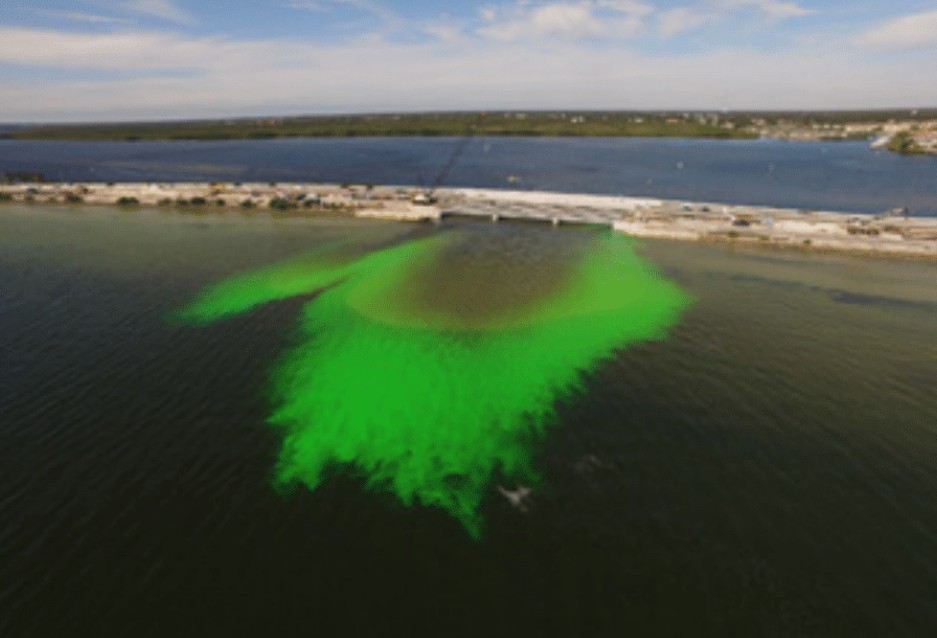
In November 2018, this project was officially completed. To visually observe the project’s impact on facilitating efficient water flow, non-toxic fluorescent tracer dye was deployed into the water on the south side of the Causeway on an incoming tide, showing the successful tidal movement. This success was further demonstrated in the months following the project’s completion, which showed a decrease in concentrations of nitrogen, an algae-feeding nutrient, and chlorophyll-a, an indicator of potentially harmful algae, reflecting the project’s positive impact on creating an environment where vital seagrasses could flourish.
The final component of the ecological restoration was seagrass recovery. According to the most recent monitoring data from SWFWMD, the initial focus area north of the Causeway has gained more than 60 acres of seagrass between 2022 and 2024. These results, which have far exceeded the environmental permit requirements for the construction of the Howard Frankland Bridge and other highway projects, have yielded a win for water quality, a win for seagrasses and the marine wildlife that depends on it, and a win for Tampa Bay.
The project has been recognized across both Florida and the nation for the significant benefits it has provided, including the honor of “Outstanding Environmental Project of the Year” by the Florida Institute of Consulting Engineers in 2017, as well as the “Florida Project of the Year Award” by the American Society of Civil Engineers and the “Environmental Excellence Award” by the Federal Highway Administration in 2019. Outside of these awards, the Department was proud to additionally honor the project and the new bridge structure in particular by renaming it the Virginia Creighton Bridge in July 2022 in recognition of the FDOT scientist who led much of the research and advocacy efforts for this project before her death in 2020.
The Old Tampa Bay Water Quality Improvement Project strongly demonstrates FDOT’s mission in action: a continued commitment to practicing good environmental stewardship, the ability to seek out and implement innovation in every project the agency undertakes and the ability to successfully meet the transportation needs of the state’s communities.
Justin Hall, is District Seven Secretary for the Florida Department of Transportation
Project Photos/Figures:
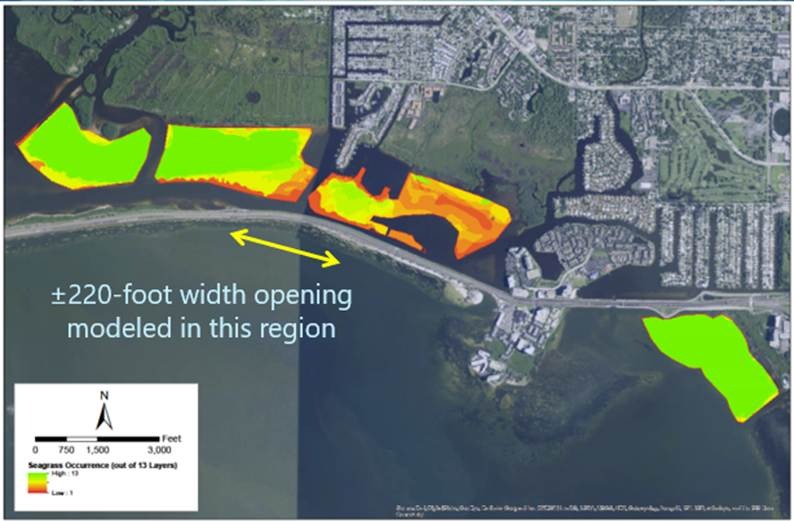
2015 Feasibility Study for the Old Tampa Bay Water Quality Improvements Study

2015 Concept of the 220 foot bridge