Florida Forever Program Hits Milestone: 200th Conservation Easement Secured

Deer Creek Ranch — Photo by Lauren Yoho/Wildpath
The Florida Department of Environmental Protection (DEP) has secured its 200th conservation easement, marking 364,117 acres of protected land through the Florida Forever Program, now celebrating its 25th anniversary.
The milestone includes key projects, such as Fisheating Creek Ecosystem in Glades and Highlands counties and Deer Creek Ranch in DeSoto County. Easements allow landowners to keep working farms and ranches while permanently limiting development and protecting wildlife corridors and watersheds.
“Conservation easements are one of the most important tools we have to protect Florida’s lands and waters,” said DEP Secretary Alexis A. Lambert.
Florida Marks Fifth Consecutive Year of Meeting Federal Clean Air Standards
Florida has once again met all federal air quality standards, marking its fifth straight year of clean air across the state, according to the Florida DEP. The state is now the most populous in the nation to achieve this distinction.
Industrial emissions have dropped 78% since 2000, and ozone levels, Florida’s most common air pollutant, have fallen nearly 50% in two decades. DEP Secretary Alexis Lambert credited the success to “collaboration between communities, businesses and partners statewide.”
Residents can track local air conditions in real time via DEP’s Air Quality Today and the AirNow.gov platforms.
Conservancy of Southwest Florida: New Law Threatens Local Control
The Conservancy of Southwest Florida warns that Senate Bill 180, passed during the last legislative session, could undermine local governments’ ability to plan for resilience and environmental protection.
Though framed as an emergency response bill for hurricane recovery, the law blocks local governments in federally declared disaster areas of Hurricanes Debby, Milton, and Helene (essentially the entirety of the state) from adopting “more restrictive or burdensome” land use or development rules, including comp plan and land development code changes, until 2027.
Critics say the measure will delay local resilience planning, increase flood risks, and erode home rule. “This law ties the hands of local governments trying to protect their residents,” the Conservancy said, joining partners like 1,000 Friends of Florida in calling for repeal.
Florida Museum — Nitrogen-Fixing Plants Evolved Multiple Times
A new study led by the Florida Museum of Natural History has revealed that the ability of plants to recognize nitrogen-fixing bacteria evolved independently at least three times, offering insight into how legumes and their relatives developed self-fertilizing capabilities. Funded by the U.S. Department of Energy, the research identifies convergent evolution in the receptors plants use to engage with bacteria that turn atmospheric nitrogen into usable nutrients.
The findings, published in PNAS, support a long-standing theory that an ancient ancestor of bean plants carried a predisposition for this symbiosis more than 100 million years ago. Scientists say the results could guide future efforts to engineer staple crops — such as corn and wheat — to fix their own nitrogen, potentially reducing the need for synthetic fertilizers and their environmental impacts.
EES Solar — Three Decades of PV Reliability Data
A multi-decade analysis published in EES Solar finds that photovoltaic (PV) modules installed in Switzerland more than 30 years ago have retained more than 80 percent of their original power output, demonstrating remarkable durability. Researchers from European institutions compared six solar systems operating under varied climates and found an average performance loss rate of only −0.24 percent per year, far below the commonly cited 1 percent annual rate.
The study attributes the longevity primarily to the quality of materials — including EVA encapsulants and Tedlar backsheets — rather than environmental stress alone. With the global PV market entering the terawatt age, the findings provide confidence in extending module lifetimes beyond standard 25- or 30-year warranties. They also underscore the importance of high-quality manufacturing for lowering long-term energy costs and reducing carbon footprints.
University of Florida — Breeding Insight Program
The University of Florida has been selected to host Breeding Insight, a USDA Agricultural Research Service program that uses AI and high-performance computing to accelerate crop breeding. The initiative supports more than 61 breeding programs nationwide, focusing on pest resistance, nutrition, and automation-ready varieties. UF/IFAS gains expanded data resources and national leadership in plant and animal genetics innovation.
Among the nearly 50 species currently supported by Breeding Insight, 10 are among the top agricultural products for Florida: blueberry, alfalfa, strawberry, watermelon, lettuce, cucumber, sugarcane, citrus, potato, and commercial beekeeping.
The program also supports honeybee and aquaculture industries to breed for improved genetic stock that are more durable. In this way, growers and producers can gain the best yields and market value while consumers benefit from U.S. agriculture production.
“Feeding the world will require that new plant varieties be developed at a much more rapid pace, and we are confident that Breeding Insight and UF/IFAS combined will be an important part of that effort.” Scott Angle, UF’s senior vice president for agriculture and natural resources and leader of UF/IFAS said.
University of Miami — Electrohydromodulation Septic System
Researchers at the University of Miami College of Engineering have developed a new electrohydromodulation (EHM) wastewater treatment system that recovers nutrients and neutralizes pollutants before they leach from septic tanks during floods. Designed for neighborhoods in Miami-Dade County, where tens of thousands of homes rely on septic systems, the technology uses electrical current rather than chemicals to adjust wastewater pH, isolating phosphorus and nitrogen for reuse.
The project, now in its pilot phase, is funded by the Florida Department of Environmental Protection and supported by the Electric Power Research Institute. By removing nutrients that contribute to algal blooms, the EHM system could play a major role in improving Florida’s water quality. Researchers say the method offers a scalable, energy-efficient solution for sustainable wastewater management statewide.
City of Tampa — South Manhattan Flood Relief Project
Tampa is launching a $6.9 million stormwater improvement project along South Manhattan Avenue to combat frequent flooding. Funded through federal, state and local sources, the plan includes larger pipes, more inlets and utility upgrades. Construction begins mid-October 2025 and will run through late 2026, improving neighborhood drainage and resilience.
Grant funding will pay for a large portion of the project, with nearly a million dollars coming from the federal government in community priority grants sponsored by U.S. Representative Kathy Castor , and $2.75 million from the Florida Department of Environmental Protection. The remainder will be funded via the Water and Wastewater Departments along with the Stormwater Improvement Assessment, an annual non-ad valorem assessment that funds new capital projects within the Central and Lower Improvement Area (south of Fletcher Avenue).
“Next year can’t come soon enough for the residents of these surrounding neighborhoods to finally see the benefits of this long-awaited stormwater improvement project,” said Mayor Jane Castor. “But it does not stop here. Across the city, we are working to strengthen this vital system that keeps us safe during rain events, and since 2019, we have invested approximately $350 million for maintenance and major investments, like this one.”
City of St. Petersburg — Coastal Flood Monitoring System
The City of St. Petersburg has approved the purchase of a new GIS-based flood monitoring and forecasting system as part of its Coastal Conditions Monitoring Project. The platform will allow city officials to anticipate, track, and respond to coastal flooding caused by tides, storm surge, and sea-level rise. By integrating detailed terrain and infrastructure data, the system will generate real-time, high-resolution flood forecasts that enhance situational awareness during storms.
The project supports St. Petersburg’s long-term climate resilience strategy under Mayor Kenneth T. Welch’s Environment, Infrastructure, and Resilience pillar. Officials say the system will not only improve emergency response but also inform infrastructure investments and future urban planning in low-lying coastal neighborhoods.
The Coastal Conditions Monitoring Project will provide the City with real-time and predictive insights to enhance preparedness and response strategies for forecasted flooding from tide and storm surge events. The project also supports the development of advanced modeling and forecasting tools that integrate local terrain, infrastructure and environmental data to generate high-resolution flood forecasts and impact assessments.
These tools will provide the City with timely, location-specific information to support decision-making before, during and after flood events.
Central Florida Water Initiative — 2025 Regional Water Plan
The Central Florida Water Initiative (CFWI) Steering Committee has endorsed the final draft of the 2025 Regional Water Supply Plan (RWSP), a 20-year roadmap to meet the area’s growing water demands while protecting natural resources. Developed collaboratively by Florida’s three regional water management districts, FDEP, FDACS, and multiple stakeholders, the plan identifies 140 water supply and development projects and 27 conservation initiatives. Without these efforts, central Florida could face a groundwater shortfall of nearly 96 million gallons per day by 2045.
The CFWI is a collaborative effort among the St. Johns River, South Florida, and Southwest Florida water management districts, the Florida Department of Environmental Protection, the Florida Department of Agriculture and Consumer Services and a diverse group of stakeholders, including water utilities, environmental organizations and agricultural producers.
This partnership is essential to addressing the unique water challenges in the rapidly growing area. The RWSP will guide water supply and conservation efforts across central Florida for the next 20 years. The final 2025 CFWI RWSP will be available on cfwiwater.com in December 2025.
SJRWMD — Black Creek Water Resource Development
The St. Johns River Water Management District (SJRWMD) is nearing completion of the Black Creek Water Resource Development Project to replenish the Upper Floridan Aquifer and restore water levels in Keystone Heights’ lakes. The project will divert up to 10 million gallons of excess water per day from Black Creek through a treatment system before routing it to Lake Brooklyn, where it will seep into the aquifer.
The initiative is being undertaken to restore lake levels and strengthen groundwater supply for Keystone Heights and surrounding areas. Completion is expected in early 2026.
The St. Johns River Water Management District is committed to ensuring a sustainable water supply through innovative projects and conservation efforts — securing the resource for generations to come.
“Lakes Brooklyn and Geneva are more than just local landmarks — they’re part of one of two major recharge areas for the Floridan Aquifer, which supplies drinking water to millions of Floridians,” said Vivian Katz, former president of the Save Our Lakes Organization. “While our community has borne the burden of declining lake levels, the greater cost will come if the aquifer gets too low. The Black Creek project is a vital first step toward protecting Florida’s water future.”
SWFWMD – Sebring Watershed Flood Mapping
The Southwest Florida Water Management District (SWFWMD) has launched a public comment period at WaterMatters.org/Floodplain through Nov. 27, 2025, for new data identifying flood-prone areas in the Sebring Watershed of Highlands County.
The updated floodplain maps will help local governments refine zoning, development, and emergency response plans. Although the data won’t immediately alter FEMA’s Digital Flood Insurance Rate Maps, it could inform future updates. Officials emphasize that public input is key to finalizing the maps before they are presented to the District’s Governing Board for approval. The information aims to improve community awareness and flood resilience in central Florida’s growing residential regions.
The information will guide land use, emergency planning, and local development decisions. Once finalized, it may be incorporated into future FEMA flood map updates.

Polk County – New Parks & Natural Resources Director
Tabitha Biehl has been named Polk County’s new Parks and Natural Resources Director, overseeing a $162 million budget and 182 employees.
A 20-year veteran of the department, she has secured more than $50 million in grants for conservation and stormwater projects. Biehl succeeds Gaye Sharpe, who is retiring after 35 years of service.
Volusia County — $50 Million Flood Mitigation Investment
The Volusia County Council has approved nearly $50 million in federal funds to advance 14 flood mitigation and infrastructure projects across the county. Combined with $30 million in local matches, the total investment will exceed $80 million. The projects — spanning DeLand, Deltona, Port Orange, South Daytona, and other communities — will expand stormwater systems, create new drainage ponds, and improve pump capacity to protect hundreds of homes and businesses.
The funding comes from the Transform386 federal recovery program. Officials said the effort marks a major step toward long-term community resilience and continues the county’s momentum in storm recovery and infrastructure modernization.
This effort marks the latest phase of the County’s ongoing strategy to strengthen flood protection and community resilience. The Volusia County Council has now awarded over $110 million in federal recovery funding for infrastructure and mitigation projects in less than a year.
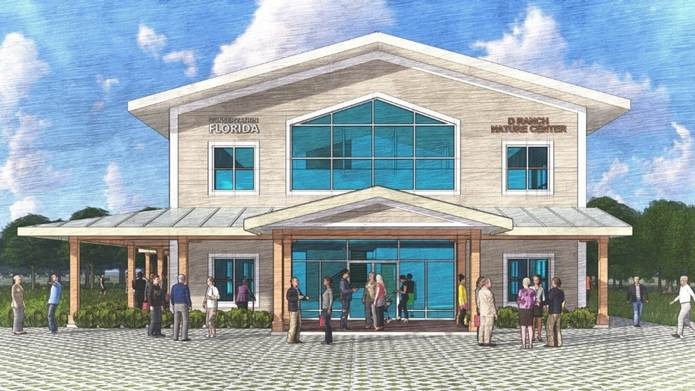
Architectural renderings by Borrelli + Partners
Conservation Florida — D Ranch Nature Center
Conservation Florida has unveiled plans for a new 8,000-square-foot D Ranch Nature Center in Volusia County, supported by the Big Nova Foundation and county ECHO funding. The two-phase project will transform the 476-acre D Ranch Preserve in Osteen into an educational and recreational hub for conservation and outdoor learning. Phase One, estimated at $2.5 million, includes classrooms, exhibit space, and accessible infrastructure.
Construction is expected to begin in 2026, with a community fundraising campaign underway to close a $400,000 funding gap — which Big Nova will match dollar-for-dollar through year’s end. Once complete, the center will serve as a gateway to wild Florida, connecting residents to nature while supporting ecotourism and environmental education.
D Ranch Preserve, located in Osteen, was permanently protected by Conservation Florida in 2019 and opened to the public in May 2025. The preserve honors the land’s deep agricultural roots, with cattle still presently grazing the property. D Ranch Preserve is a haven for other wildlife like the gopher tortoise, bobcat, and Florida black bear, as well as rare blooms like the pine lily.
Florida Defenders of the Environment — Ocklawaha Restoration Campaign
Florida Defenders of the Environment (FDE) has launched its “It’s About Dam Time” campaign, urging public and legislative support for restoring the Ocklawaha River by removing the Rodman/Kirkpatrick Dam. The group aims to reconnect 20 buried springs, restore 15,000 acres of wetlands and improve water flow to Silver Springs and the St. Johns River.
Advocates say the project would reopen historic migration routes for manatees and fish while boosting recreation and ecotourism in north-central Florida. FDE’s push ahead of the 2026 legislative session emphasizes that restoring the river would benefit wildlife, water quality and local economies while fulfilling decades of conservation advocacy.
Supporters can sign the pledge at:
Pledge to Restore the Ocklawaha River – Reunite the Rivers
FPL & Duke Energy – EEI Emergency Response Awards
The Edison Electric Institute (EEI) has recognized Florida Power & Light (FPL) and Duke Energy Florida for exemplary emergency response and recovery efforts. FPL received honors for assisting other utilities after Hurricane Helene (2024) and Winter Storm Enzo (2025), deploying hundreds of workers for rapid restoration. Duke Energy Florida earned its award for restoring power to 95% of affected customers within 96 hours of Hurricane Milton (2024), aided by advanced self-healing grid technology that prevented 3.3 million hours of outages. EEI leaders praised both utilities for their leadership, coordination, and commitment to strengthening storm resilience.
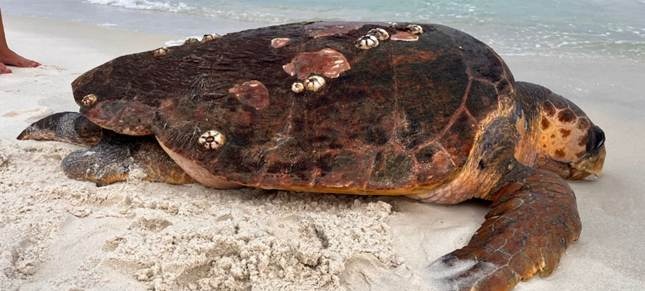
FPL & Gulf Coast Turtle Watch – Rescue Van Initiative
Florida Power & Light (FPL) and the NextEra Energy Foundation have partnered with Gulf Coast Turtle Watch to fund a new sea turtle rescue van serving the Pensacola Beach area. The vehicle, customized for rapid transport of injured sea turtles to rehabilitation centers, cuts response times dramatically and doubles as a mobile education platform.
Designed by local artist Steve Blair, the van’s vibrant wrap highlights Florida marine life and community conservation. Volunteers say the van will greatly improve survival outcomes for stranded turtles, while officials hail it as a model for public–private collaboration in wildlife protection. The project reflects FPL’s continued commitment to environmental stewardship and coastal conservation across Florida.
Parsons Acquires Applied Sciences Consulting, Inc.
Parsons Corporation on Oct. 2 announced it had acquired Applied Sciences Consulting, Inc., a Florida-based engineering firm that specializes in water and stormwater solutions for cities, counties and water management districts across the state.
Founded in 2005, Applied Sciences is based in Tampa, Florida, and works closely with agencies across Florida to deliver solutions that protect and advance the region’s water infrastructure resilience. The acquisition expands Parsons’ water expertise, strengthens its presence in Florida, and is consistent with the company’s strategy of completing accretive acquisitions with revenue growth and adjusted EBITDA margins of at least 10 percent. The acquisition was an all-cash transaction. Applied Sciences will be integrated into Parsons’ North America Infrastructure business unit.